Île D'Orléans Day Trip From Quebec City: Farm Stands, Cider, Strawberries And The Six Villages
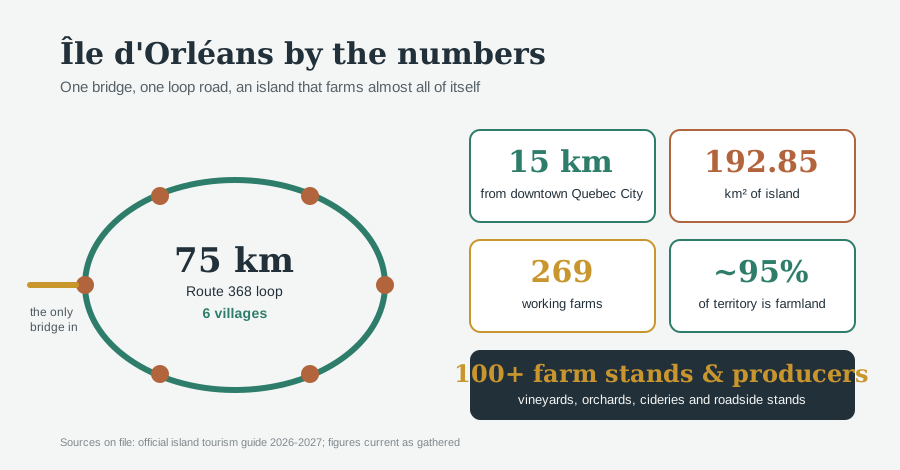
Fifteen kilometres from downtown Quebec City sits an island where almost 95 percent of the land is farmed. Here is how to spend a day eating your way around it.
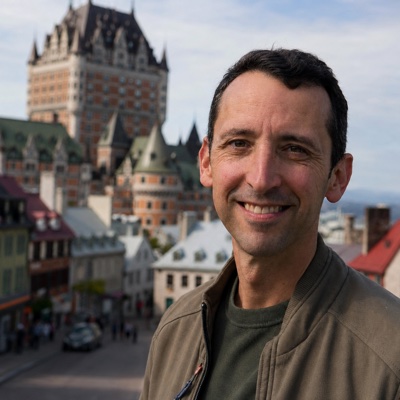 Written with Jean-Pierre Tremblay, Quebec City tour guide & heritage specialist
Quick answer
Yes, Île d'Orléans makes an easy half-day or full-day trip from Quebec City. The only bridge is 15 km downstream from downtown, Route 368 loops 75 km through six villages, and the island holds 269 farms plus more than 100 farm stands, vineyards, orchards and cideries. Guided taste tours start at $62.
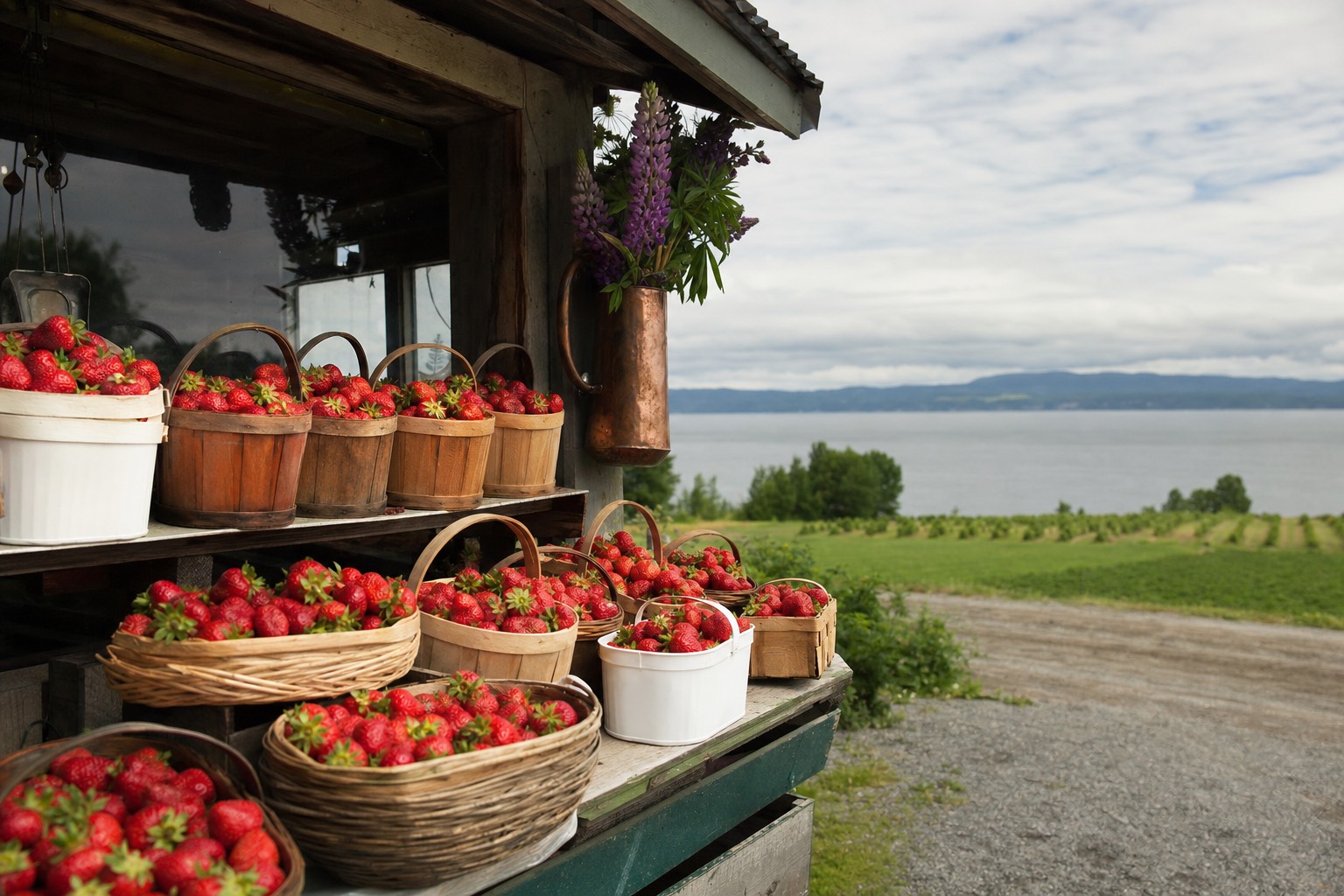
The first farm stand past the bridge sells strawberries by the wooden flat, and in early July the smell reaches you before the cash box does. I take the loop road two or three times a summer, usually with a baguette on the passenger seat and no plan beyond stopping whenever a hand-painted sign looks promising. Guests ask me for one trip outside the walls that feels like Québec rather than a checklist. This is the one I give them.
TL;DR: Île d'Orléans is a 192.85 km² farming island 15 km downstream from downtown Quebec City, reached by a single bridge. Route 368 makes a 75 km loop through six villages, past 269 farms and more than 100 farm stands, vineyards, orchards and cideries. Strawberries rule the summer, apples and cider the fall. No car? A guided taste-trail bus runs from $62, a tasting e-bike tour from $146.
Is Île D'Orléans Worth A Day Trip From Quebec City?
Yes. The island sits 15 km downstream from downtown, close enough that the bridge appears twenty minutes after you leave the old walls. Nearly 95 percent of its 192.85 km² is farmland, worked by 269 farms, and more than 100 stands, vineyards, orchards and cideries sell straight to whoever pulls over.
People call it the garden of Québec, and for once the nickname undersells the place. This is not a countryside theme park bolted onto a city. It is a working island, with 295 agricultural operators tending fields their families have held for generations, and the food you buy at the roadside was often picked that morning a few rows away. Quebec City's official tourism office points visitors here for exactly that reason.
The island pairs naturally with Montmorency Falls, which thunders away just before the bridge turnoff on the mainland side. Most drivers and nearly every organized tour combine the two, and my Montmorency Falls guide covers that stop in detail. If you are still weighing the island against Tadoussac, Charlevoix and the other escapes, the full rundown lives in my day trips from Quebec City guide.
Give it half a day at minimum. A full day lets you circle the whole loop, eat two meals from farm stands, and still sit on a dock watching the river slide past.
What Are The Six Villages Of Île D'Orléans?
Route 368 forms a 75 km loop linking six villages: Sainte-Pétronille, Saint-Laurent, Saint-Jean, Saint-François, Sainte-Famille and Saint-Pierre. About 7,000 people live on the island year-round. Each village has its own church, its own shoreline, and its own reason to pull over.
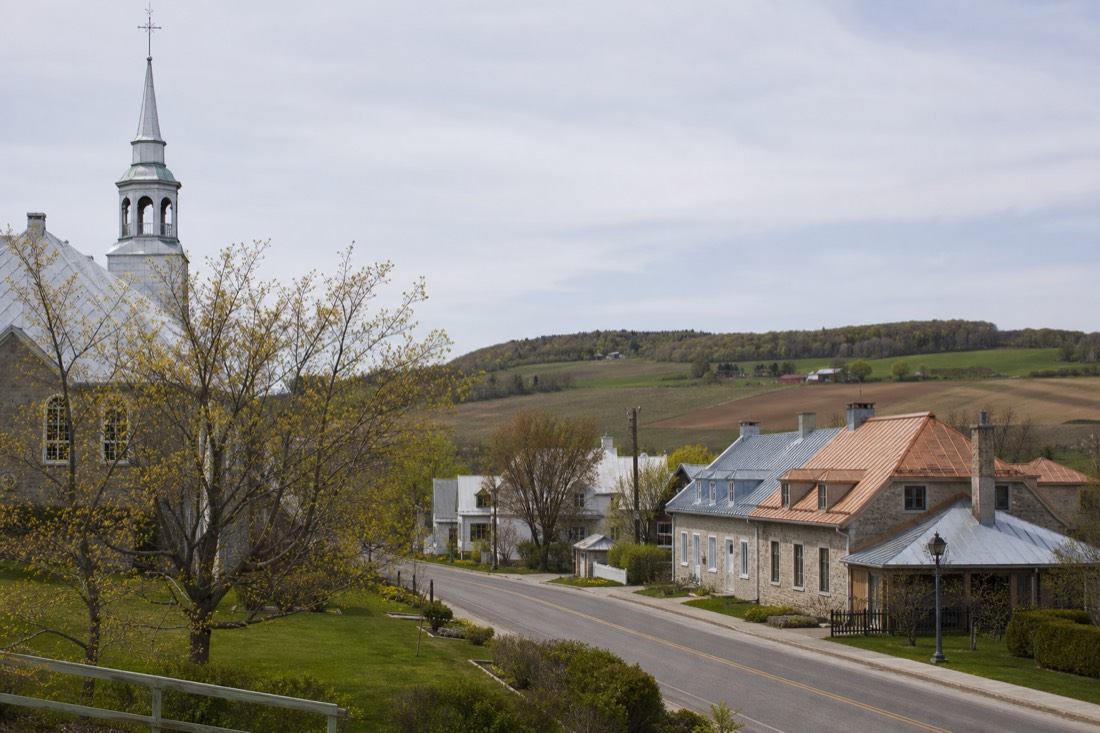
Drive the loop counterclockwise from the bridge and the villages arrive in this order.
| Village | Where on the loop | Why stop |
|---|---|---|
| Sainte-Pétronille | West tip, first left off the bridge | Vineyard rows and the classic look back at Montmorency Falls and the city skyline |
| Saint-Laurent | South shore | The island's old boatbuilding shore, with docks and river access |
| Saint-Jean | South shore, further east | Handsome riverfront houses from the island's maritime era |
| Saint-François | Eastern tip | The quietest stretch, where the St. Lawrence widens toward the open river |
| Sainte-Famille | North shore | One of the island's oldest parishes, deep farm country |
| Saint-Pierre | North shore, closing the loop | Espace Félix-Leclerc, a cultural venue honouring the island's most famous resident |
The distances between villages are short, which is the island's quiet luxury. You are never more than a few minutes from the next stand, church or viewpoint, so a day here has no dead driving time. Cross-island roads also cut the loop in two if you run short of daylight.
What Is In Season On Île D'Orléans Through The Year?
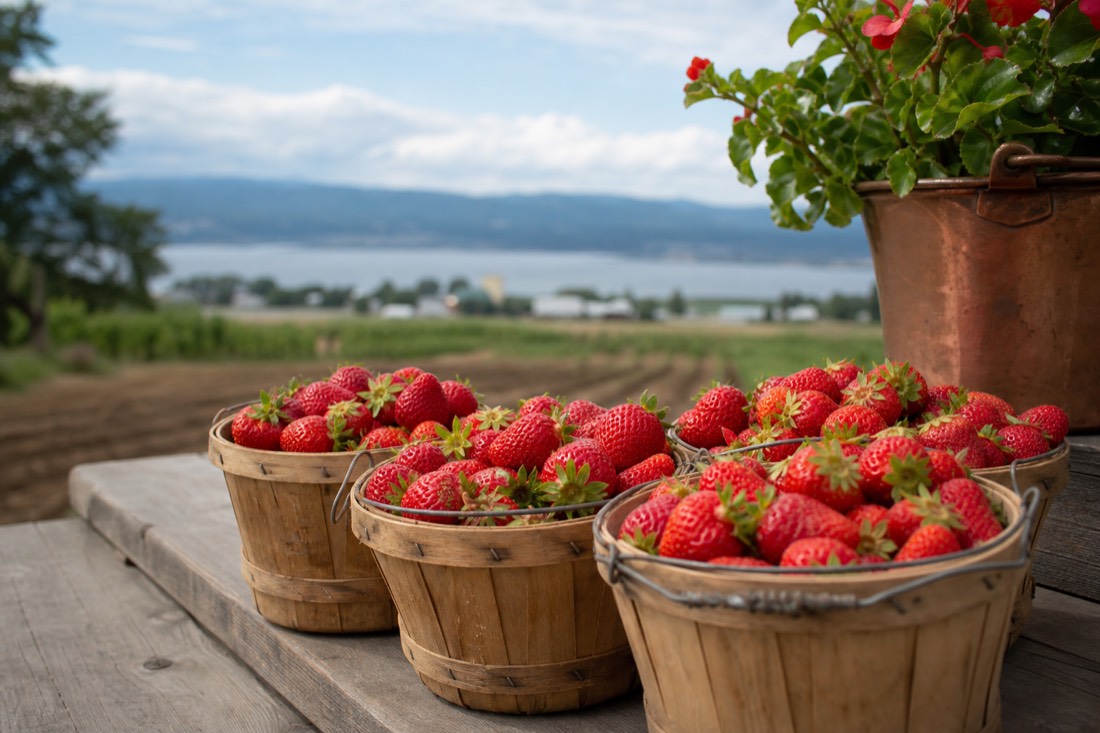
The island's produce calendar runs on summer and autumn harvests. Strawberries headline early summer, market gardens peak through August, and orchards and cideries take over in fall. Most stands wind down after the apple harvest, and in winter the island turns to snow sports.
| Season | What's happening | Good to know |
|---|---|---|
| Spring (May to June) | Stands reopen, first greens appear, roads are quiet | The gentlest time to drive the loop, before the crowds |
| Early summer (late June to July) | Strawberry season, the island's signature crop | Flats sell out by afternoon at busy stands; go before lunch |
| Late summer (August) | Market gardens at full tilt, vineyards ripening | Peak choice at the stands, peak traffic on Route 368 |
| Autumn (September to October) | Apple harvest, cideries pressing, orchard visits | The best season for cider tastings and picking |
| Winter (November to April) | Most stands closed, fields under snow | A guided island snowmobile tour runs at 4.9 across 232 GetYourGuide reviews, from $152 |
More than 100 tourist businesses operate around the island, from farm stands and orchards to vineyards and cideries, and the island's official 2026-2027 tourism guide lists them producer by producer. If you come in the cold months, the snowmobile outing above sits with the rest of the season's options on the winter tours page.
One honest warning: opening hours out here follow the harvest, not a mall schedule. A stand that overflowed in July may be shuttered by late October.
Should You Take A Tour Or Drive Île D'Orléans Yourself?
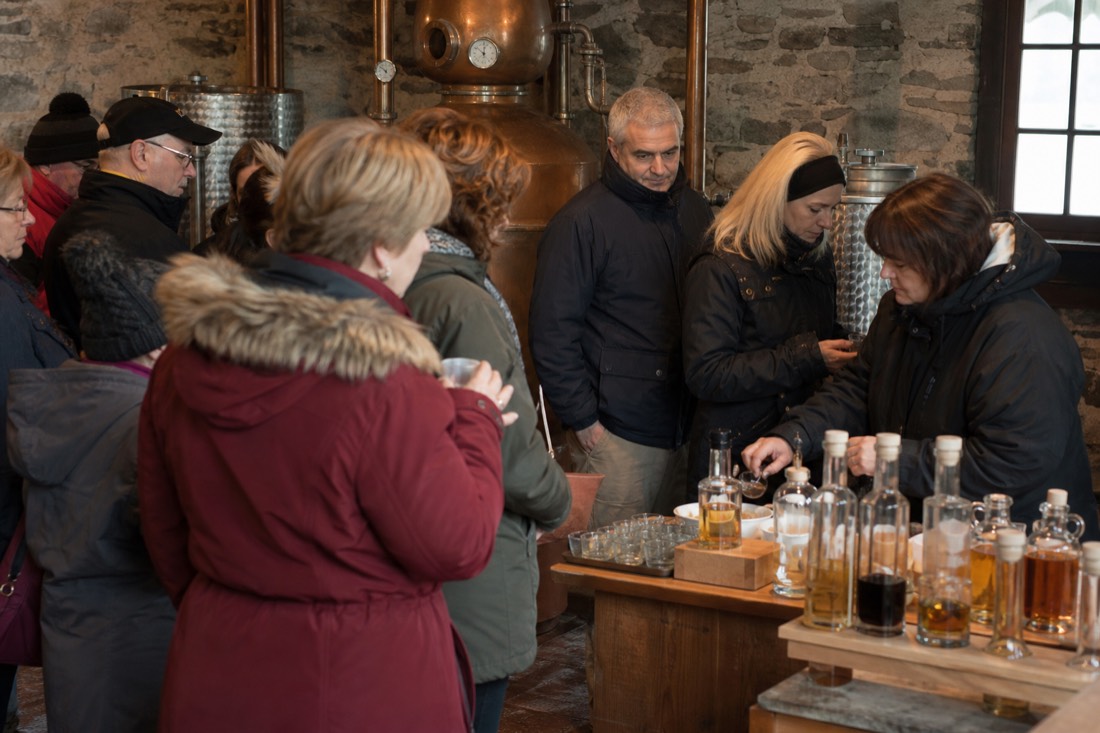
Without a car, the guided taste-trail bus from Quebec City is the straightforward answer, from $62 with tasting stops and a 4.6 rating across 239 GetYourGuide reviews. With a car, self-driving wins on flexibility. The tasting e-bike tour, from $146, splits the difference for active travellers.
| Option | Cost | What you get | Best for |
|---|---|---|---|
| Island of Orléans Taste Trail (bus) | from $62 | Guided loop from Quebec City with producer tasting stops; 4.6 across 239 GetYourGuide reviews | Visitors without a car who want the food story told |
| Guided e-bike tour with tastings | from $146 | Pedal-assisted island ride with tasting stops; 4.9 across 160 GetYourGuide reviews | Active travellers who want to earn their cider |
| VIP agritourism lunch tour (with Montmorency) | from $333 USD | Small-group Viator outing pairing island producers with a sit-down lunch; a newer listing, rated 5.0 across its first 16 reviews | Food-first travellers happy to pay for a long table |
| Self-drive | car rental plus what you eat | Total freedom on the 75 km loop, stop anywhere | Anyone with a car and no schedule |
Nobody in my trade drives the loop better than you can yourself, so if you have wheels, go independently and follow your appetite. The tours earn their keep when you are car-free or when you want the producers' doors opened for you with tastings already arranged. Reviewers consistently rate the bus version well, and it slots beside the city's other eating-focused outings on the food tours page, where you can check live availability & prices on GetYourGuide for the taste trail itself.
On the VIP option, a word of honesty: a 5.0 rating across only 16 reviews means a new product with a small sample, not a proven legend. Early reviewers clearly loved it. Just read it as promising rather than established.
Can You Cycle Around Île D'Orléans?
Yes, and the island is one of the best cycling day trips near Quebec City. Route 368's 75 km loop is long for casual riders, which is why the guided option uses e-bikes: pedal-assist plus tasting stops, from $146, rated 4.9 across 160 GetYourGuide reviews.
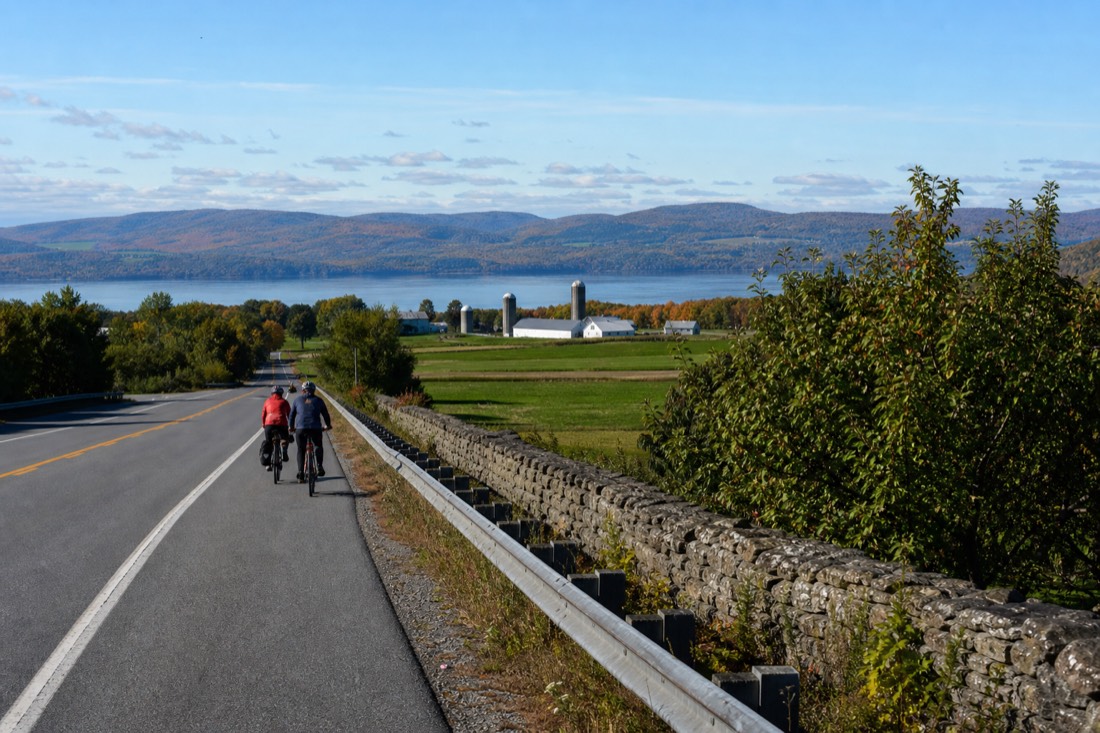
The arithmetic matters here. Seventy-five kilometres is a serious ride on a regular bike, especially with strawberry stops stacking up in your panniers. Pedal-assist flattens the island's rolling farmland and turns the loop into a pleasure ride instead of a training day, which is exactly how the operators pitch it. The guided e-bike tour builds tastings into the route, so the cycling and the eating stop competing with each other.
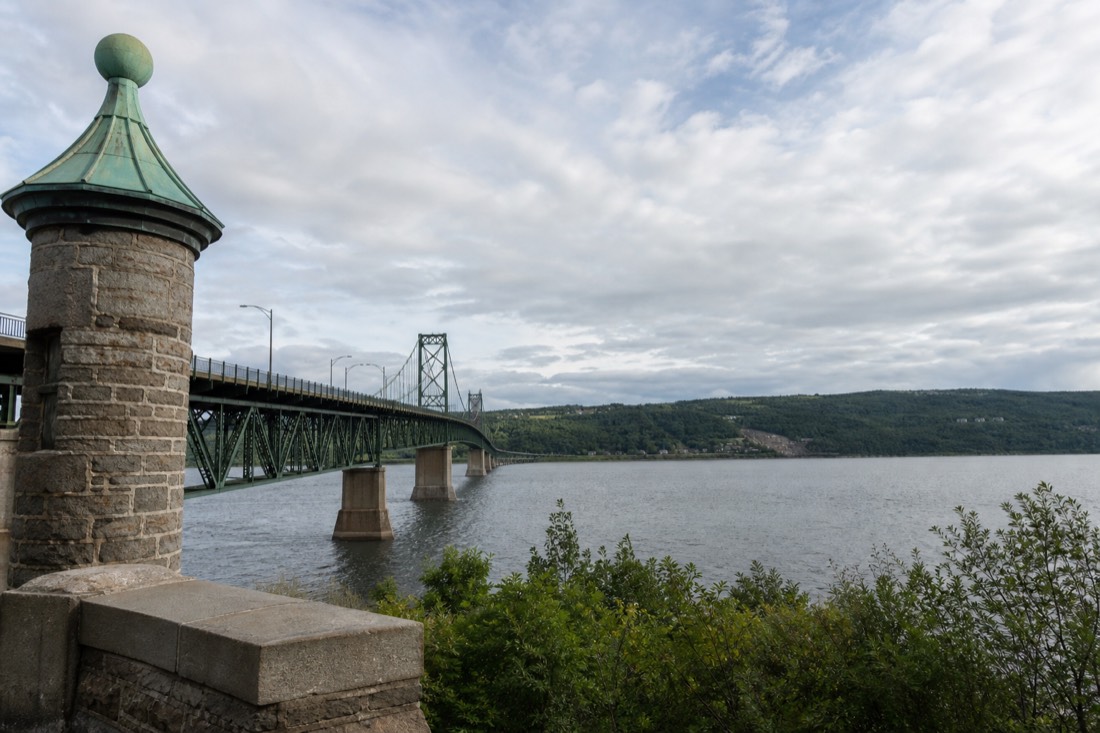
Riders who prefer to stay closer to the city have options along the river path as well, and the bike tours page compares the island ride against the Montmorency-bound routes. I flag one planning point from experience with guests: the bridge is the only way on or off by road, so cyclists cross the same span as every car on the island. Ride it early or ride it late, not at summer midday.
How Long Does The Île D'Orléans Loop Take With Stops?
Allow four hours for a half-day version and seven to eight for a proper one. Route 368 rings the island in 75 km, and the driving is the smallest part of the day. Every farm stand, church and river viewpoint costs fifteen to thirty minutes, and the good ones cost more.
The bridge is twenty minutes from the old walls, which fools people into treating the island as a quick errand. Then the first stand appears, and the second, and the arithmetic changes. Seventy-five kilometres of village road works out at roughly an hour and a quarter of moving time before you stop for anything at all, and stopping is the entire reason to come.
Half a day works if you accept a compromise: cross the bridge, take the west end, run the south shore as far as Saint-Jean, then cut back across the island on one of the cross roads. You get the city view from Sainte-Pétronille, two or three producers and a church. You do not get the eastern tip, which is the quietest and least photographed part of the island.
A full day is the version that earns the trip. Whole loop, six villages, two meals bought at the roadside, and enough slack to sit on a dock at Saint-Laurent watching the river work. The figures below are planning allowances for building a day around, not an operator schedule.
| Segment of the day | Planning allowance | What eats the time |
|---|---|---|
| Old Québec to the bridge, 15 km | About 20 minutes | Beaupré-side traffic on summer afternoons |
| Bridge to Sainte-Pétronille and the first viewpoint | 15 to 20 minutes | The look back at the falls and the city skyline |
| Each farm stand, vineyard or cidery | 15 to 30 minutes each | Tasting, queueing at the cash box, loading the car |
| Lunch from a stand or a village table | 45 to 60 minutes | Longer if you sit down rather than picnic |
| Espace Félix-Leclerc at Saint-Pierre | 45 to 60 minutes | The last cultural stop before the bridge back |
| Driving the 75 km loop itself | Just over an hour of moving time | Route 368 is a village road, not a highway |
| Half-day shape | About 4 hours door to door | Half the loop and two or three stops |
| Full-day shape | 7 to 8 hours | Six villages, two meals, time by the water |
What Does An Île D'Orléans Day Cost For Two People?
The guided taste trail is $124 for a pair at $62 each, the e-bike tour with tastings $292 at $146 each, and the VIP agritourism lunch $666 USD at $333 each. Self-driving costs whatever your car costs plus whatever you eat, which is the loosest and often the cheapest number.
Set the tours side by side and the price ladder is steep but logical. The bus taste trail buys you a driver, a route and doors already opened at the producers, at 4.6 across 239 GetYourGuide reviews. The e-bike more than doubles the per-head cost because you are hiring machines and a guide who rides with you, and it holds 4.9 across 160 reviews. The VIP outing sits in another bracket again, pairing island producers with a sit-down lunch and folding in Montmorency, at 5.0 across only 16 reviews, which is a small sample rather than a proven record.
Self-driving is the wildcard. If you already have a car the marginal cost of the island is fuel and lunch, which is why so many local families spend a Sunday out here. If you would be renting purely for this day, the rental usually costs more than two seats on the bus, and you still buy your own tastings.
The line nobody budgets is the one at the stands themselves. Strawberries go by the wooden flat in July and cider by the bottle in October, and people who came for a look regularly drive home with a boot full of food.
| Way to do the island | Two adults | What the price includes | What it does not |
|---|---|---|---|
| Island of Orléans Taste Trail, bus | $124, at $62 each | Guided loop from Quebec City, producer tasting stops | Anything you buy at the stands |
| Guided e-bike tour with tastings | $292, at $146 each | Pedal-assist bike, guide, tastings on the route | Lunch, and the energy is yours |
| VIP agritourism lunch tour | $666 USD, at $333 each | Small group, sit-down lunch, Montmorency in the same outing | The small-sample caveat above |
| Self-drive, car you already have | Fuel plus what you eat | Total freedom on the 75 km loop | Nothing arranged for you |
| Self-drive, car rented for the day | Rental plus fuel: varies | The same freedom, at a set-up cost | Often more than two bus seats |
| Money spent at the stands | Entirely your call | Strawberries, cider, cheese, bread | n/a |
Who Should Skip Île D'Orléans?
Anyone on a single first day in Quebec City, and anyone visiting between November and April who was coming for the food. The island is a working farm landscape, nearly 95 percent of it under cultivation, so when the harvest ends the reason to cross the bridge largely ends with it.
Be honest with yourself about what the island is. There is no headline monument here, no cathedral queue, no ticketed attraction with a turnstile. What there is: 269 farms, more than 100 producers and tourist businesses, six village churches and a great deal of river. Visitors who need a sight to tick will find the loop underwhelming. Visitors who like buying food from the person who grew it will not want to leave.
Timing disqualifies more people than temperament does. Come in February and the fields are white, the stands are shuttered and the island turns into snowmobile country, which is a fine day out and a completely different one. Come the week the strawberries land and the same road is a festival.
One last group: cyclists on regular bikes planning a midsummer midday crossing. The bridge is the only way on or off, and you share that single span with every car on the island. Ride it early, ride it late, or take the pedal-assist option and let the motor handle the loop.
| If this is you | Verdict | Why |
|---|---|---|
| One day in Quebec City, never seen the old town | Skip the island | The walled city is what you flew for |
| Visiting November to April, here for the food | Skip, or come for snow instead | Most stands close after the apple harvest |
| No car, no appetite for a group bus | Probably skip | Single bridge, 75 km loop, nothing walkable from it |
| You want monuments, not producers | Reconsider | The draw is 269 farms, not architecture |
| Cyclist on a regular bike at summer midday | Ride early or take the e-bike tour | One shared bridge span, 75 km of loop |
| Two or more days here and any interest in food | Go, and take the full day | This is the best non-walled-city day in the region |
Who Was Félix Leclerc, And Where Do You Find Him On The Island?
Félix Leclerc was Québec's beloved singer-poet, a founding voice of French-Canadian song who made his home on Île d'Orléans and wrote the island into his music. Espace Félix-Leclerc, a cultural venue in Saint-Pierre on the north shore, keeps his legacy alive.
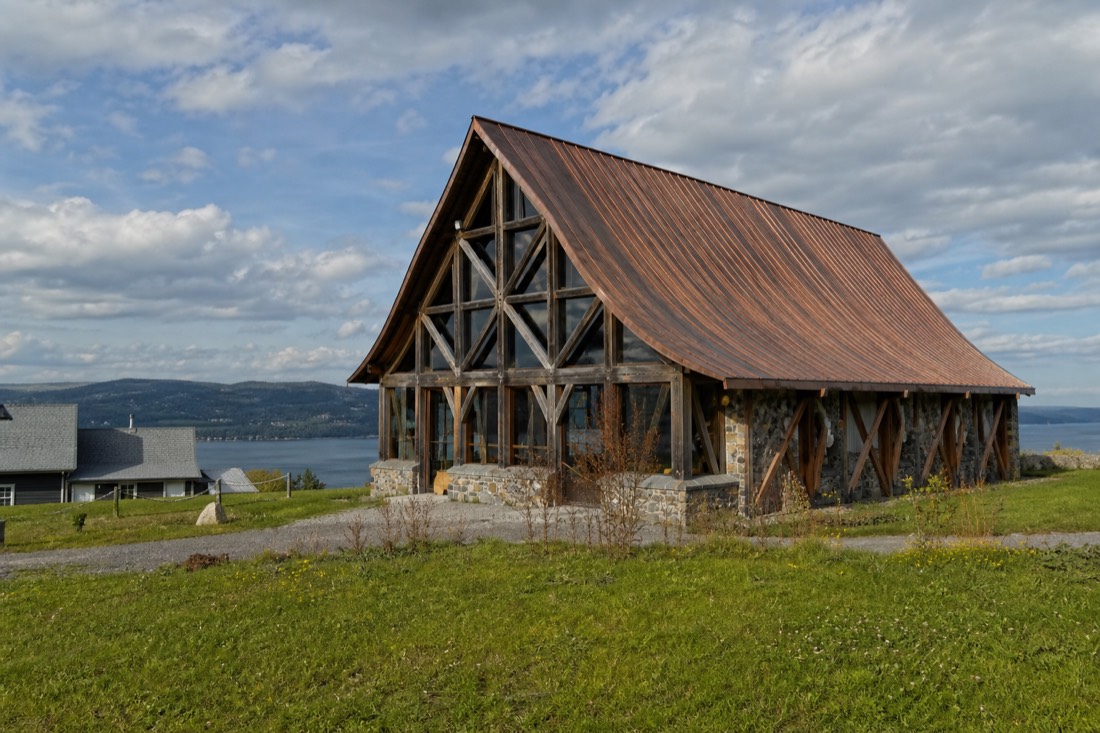
You cannot spend a day here and skip him, because for francophone visitors the island and the man are the same thought. Leclerc sang of the island's quiet miles of fields and fences, chose to live among them, and is buried in island ground. When Québécois drive this loop, many of them are hearing his songs in their heads the whole way around.
Espace Félix-Leclerc in Saint-Pierre makes a natural final stop before the bridge carries you back. Pair it with the last farm stand of the day and you leave with the island's two exports in hand: its food and its poetry.
If the island has claimed one of your days, build the rest of your visit around it with my Quebec City itinerary guide. The old town will still be there at dinnertime, and you will walk into it smelling faintly of strawberries.
Your Next Step
Choose Your Quebec Experience
General recommendation, before you add preferences. Confirm dates and participation requirements with the operator.
Have your travel date in mind? Ride from Old Quebec to island producers for small local tastings. Check the departure before arranging the rest of your day.
3 hours, English or French; meet at 18 Rue des Jardins. Hotel pickup and a full meal are not included. Mobility and dietary needs require confirmation.
Choose your exact date and party on GetYourGuide using the booking link below, then confirm both before booking.
Compare Options And Fit Your Plans
Ride from Old Quebec to island producers for small local tastings. 3 hours, English or French; meet at 18 Rue des Jardins. Hotel pickup and a full meal are not included. Mobility and dietary needs require confirmation.
Explore the island’s countryside by e-bike with a guide and local tastings. 4 to 6.5 hours depending on option; allow the longer window. Adult-size bikes and confident cycling required; roads have no cycle lanes. Meet at 507 Route Prévost unless your option confirms a shuttle.
Explore Île d’Orléans producers and Montmorency Falls on a guided food-focused excursion. Review the current itinerary, lunch inclusions and pickup arrangements. Tastings and menus may vary.
Affiliate links: we may earn a commission at no extra cost to you.