Getting Around Quebec City: Walk It, Ride The Funicular, Skip The Car
Old Quebec was laid out for boots and cart wheels, not cars. Here is how I actually move through it, and what each option costs.
 Written with Jean-Pierre Tremblay, Quebec City tour guide & heritage specialist
Quick answer
Walk. Old Quebec is compact and its cobbled lanes reward feet over wheels. Take the $7 funicular between Upper and Lower Town, use an RTC bus or the hop-on-hop-off for sights beyond the walls, and leave the rental car outside the old city.
Every morning I meet guests at the top of the Casse-Cou stairs, and every morning somebody arrives out of breath. They drove in, circled for parking, gave up, parked outside the walls, then climbed. By day two they have all reached the same conclusion I opened with: in this city, your feet are the vehicle. The rest of this guide is what I tell them next, with real prices attached.
TL;DR: Walk Old Quebec; the district is small and no vehicle gets closer to it than you do on foot. The funicular ($7 one way, 9 am to 9 pm daily) handles the cliff between Upper and Lower Town. RTC city buses and taxis cover everything beyond the walls, the hop-on-hop-off double-decker does the same with commentary, and e-bikes flatten the hills. Driving yourself is the one option I talk people out of.
What Is The Best Way To Get Around Quebec City?
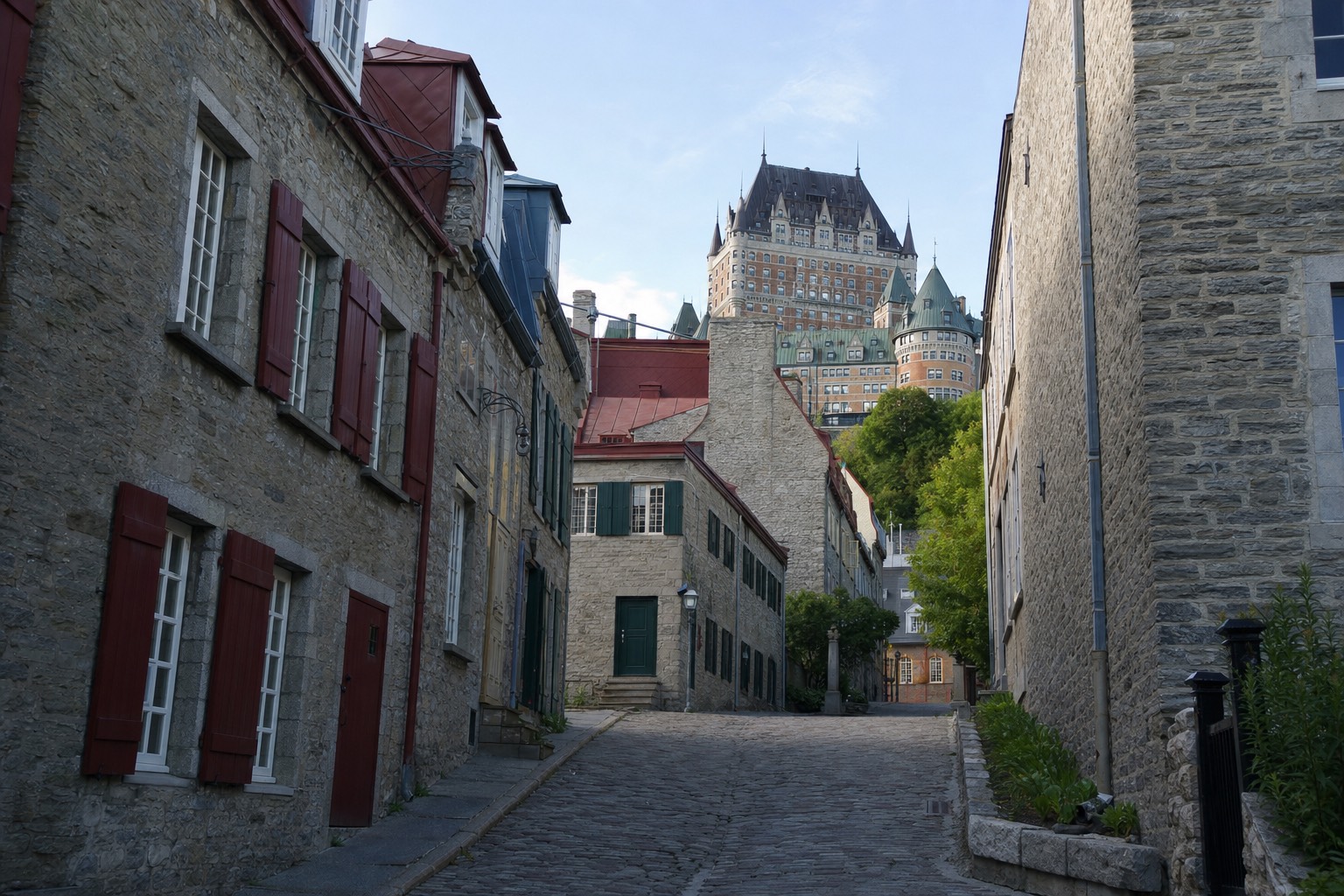
Walk. Old Quebec is compact, and its narrow cobblestone streets were laid down centuries before cars, so no vehicle gets you closer than your own feet. Use the $7 funicular for the cliff between Upper and Lower Town, an RTC bus or the hop-on-hop-off for anything beyond the walls, and skip renting a car.
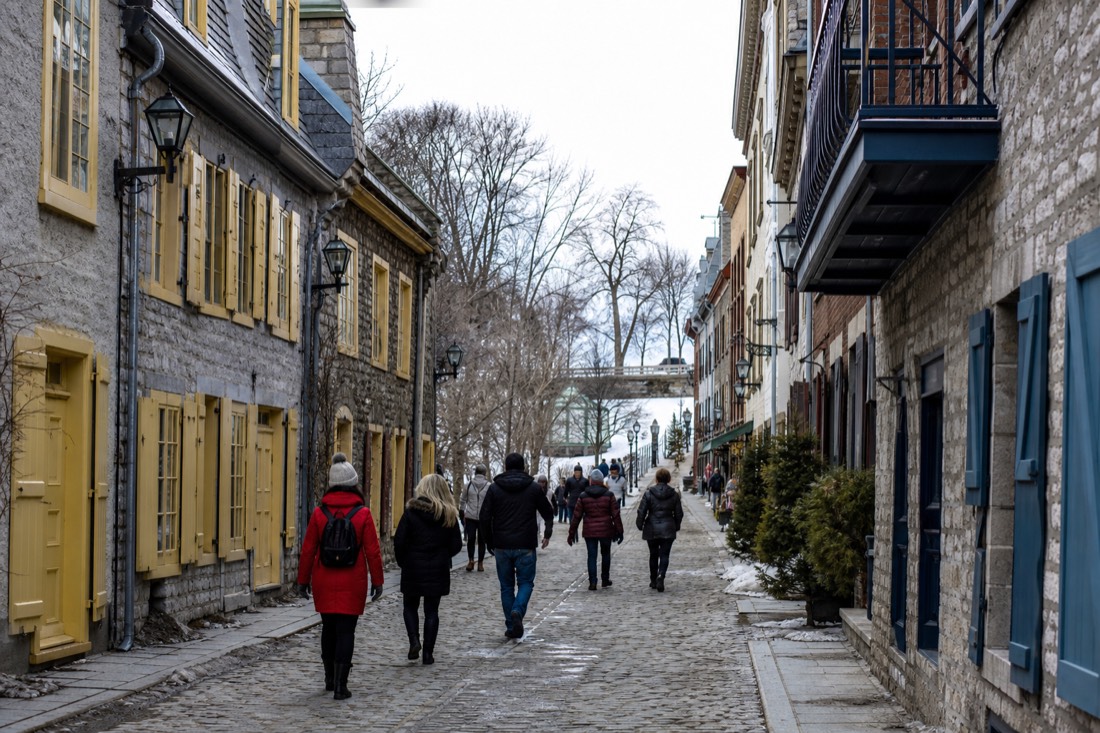
This is not guide romanticism. The city's own tourism office says the same thing on its public transportation page: Old Quebec's narrow cobblestone streets are best explored on foot, parking inside is limited, and walking or transit is the recommended way in. When the official advice and the guy who walks these streets for a living agree, believe it.
Here is how the options stack up against each other. Costs are what I can verify right now; two listings show their price only at checkout, so I have marked those.
| Mode | Cost | Effort | Best for |
|---|---|---|---|
| Walking | Free | High on the hills | Everything inside the walls |
| Funicular | $7 one way | None | The Upper Town to Lower Town cliff |
| RTC city bus | Posted fare; kids 12 and under free with an adult | Low | Reaching sights beyond the walls cheaply |
| Taxi / ride-hail | Metered | None | Late nights, luggage, tired legs |
| Hop-on-hop-off bus | Price on the listing | None | Seeing the spread-out sights in one loop |
| E-bike rental | $44 USD for 4 hours | Low, motor assists | Covering distance without fighting the grades |
| Your own car | $2 per 20 min to park, $21.50 daily cap | High (the parking hunt) | Day trips out of the city only |
One persona deserves a special note: if you are stepping off a ship, the terminal sits at the foot of Lower Town and you can be on Place Royale within minutes on foot. I break that arrival down street by street in the cruise port guide.
How Long Does It Take To Walk Around Old Quebec?
At my guiding pace, the classic loop of Old Quebec, meaning Dufferin Terrace, Place Royale, Petit Champlain and a stretch of the ramparts, takes two to three hours with photo stops. A brisk walker can cross the whole district in about twenty minutes. Add the Citadelle and the Plains of Abraham and you have filled a full day.
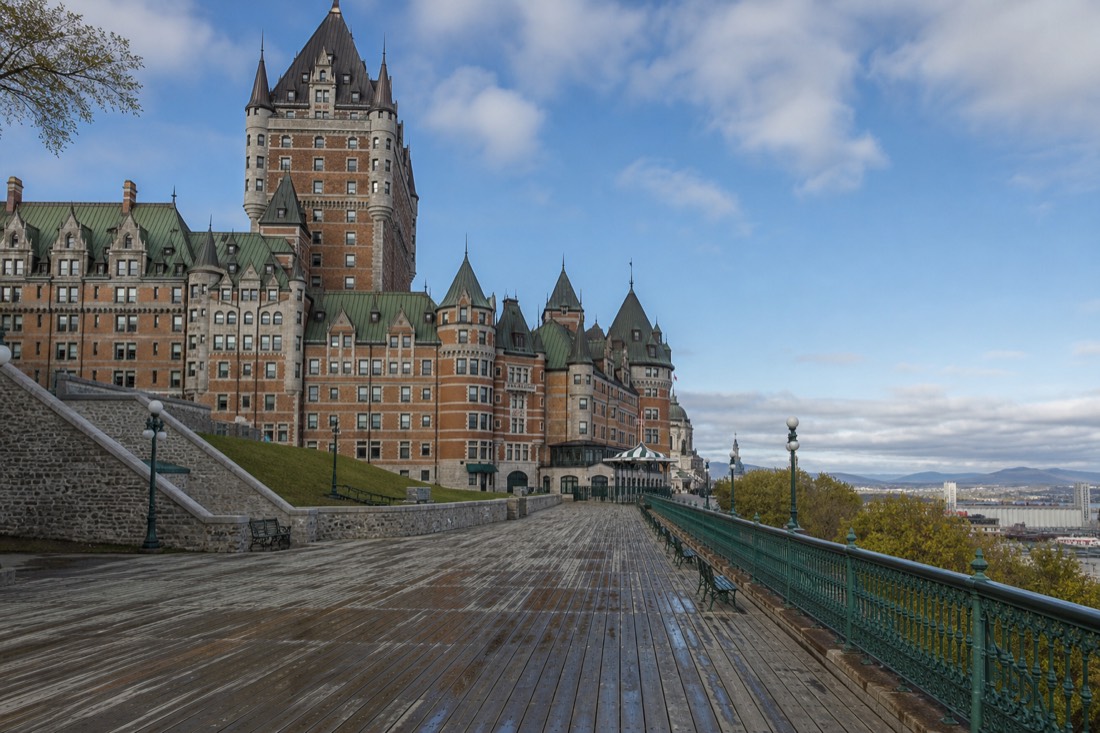
Those numbers come from doing this loop most days since 2022, so treat them as a guide's stopwatch rather than a scientific survey. What slows people down is never distance. It is the stopping: a doorway on rue Saint-Louis, the mural at Place Royale, the view opening up over the St. Lawrence from the boardwalk. Budget for the stopping.
| Walk | Time at my pace | What slows you down |
|---|---|---|
| Dufferin Terrace, end to end | 10 to 15 minutes | The river view and the street performers |
| Upper Town core (Frontenac, Place d'Armes, rue Saint-Louis) | About 1 hour | Shops and photo stops |
| Lower Town (funicular down, Petit Champlain, Place Royale) | About 1 hour | Crowds in the narrow lanes at midday |
| Ramparts stretch near the gates | 30 to 45 minutes | Uneven footing, cannon photos |
| The full classic loop with stops | 2.5 to 3 hours | All of the above |
| Loop plus Citadelle and Plains of Abraham | A full day | Two big sites with their own grounds |
If you would rather follow a mapped route than wander, I have laid out my exact circuit with turn-by-turn directions in the self-guided walking route, and it slots into any day of a longer Quebec City itinerary.
How Do You Get Between Upper Town And Lower Town?
Three ways: the funicular, the Casse-Cou stairs, or the long ramp of Côte de la Montagne. The funicular costs $7 one way and runs daily from 9 am to 9 pm. The stairs are free, steep, and quick going down. Most of my guests ride up and walk down.
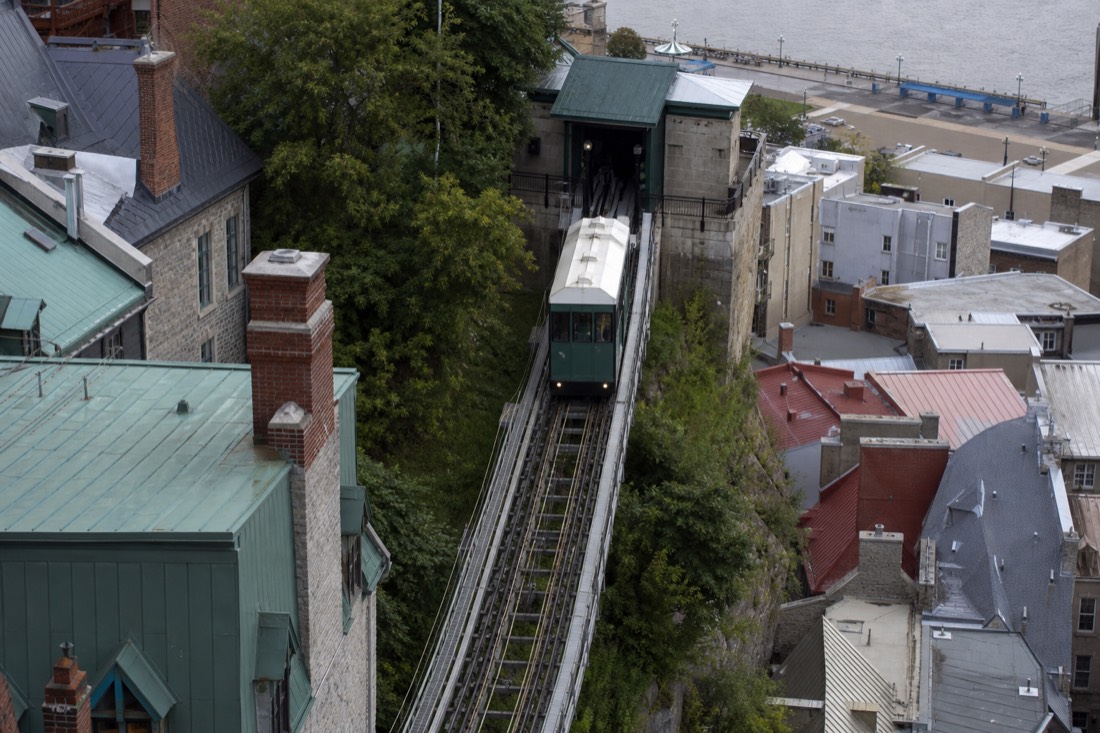
The cliff between the two towns is the single fact of geography that shapes every walking day here. The funicular solves it in under two minutes, and the glass car turns the ride itself into a viewpoint: you watch the rooftops of Petit Champlain rise toward you as you drop. At $7 a ride it is not cheap transit, but nobody I have ever taken on it regretted the window.
The Casse-Cou stairs, the "breakneck" stairs, are the free alternative, landing you right at the top of rue du Petit-Champlain. Down is easy. Up is a workout, and in winter the treads ice over, so hold the rail. Côte de la Montagne is the road route: no steps, a steady grade, and the pretty detour past the pedestrian gate. When I guide families with strollers, we take the funicular up and the Côte down, every time.
What Is The Best Way To Tour Quebec City If You'D Rather Not Walk Everything?
The hop-on-hop-off double-decker is the low-effort way to tour Quebec City. Unitours' open-top bus loops the major sights, carries a 4.4 rating across 1,665 GetYourGuide reviews, and lets you ride the climbs and hop off only where you want to linger. Current pricing shows on the listing.
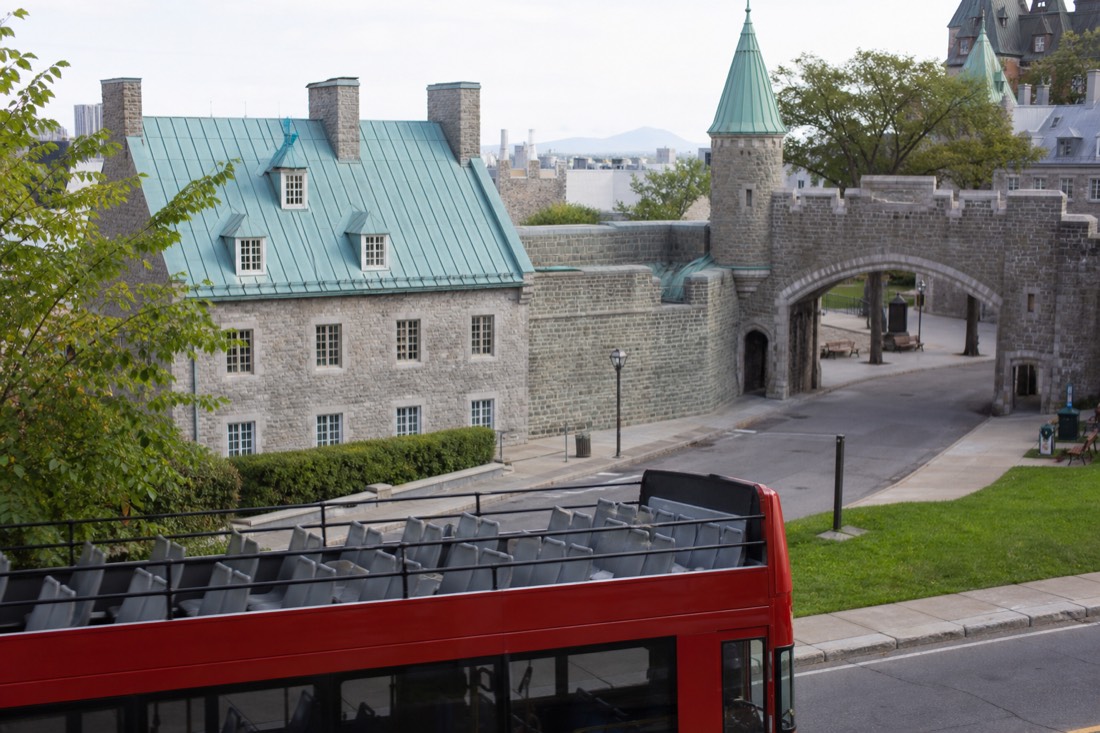
I am a walking guide, so it may surprise you that I recommend a bus. But the sights beyond the walls, the Plains of Abraham, the Parliament, the viewpoints along the river, are spread out exactly where legs start to complain, and the double-decker stitches them together with commentary while you sit. It pairs naturally with walking: ride the loop once for orientation on your first morning, then spend the afternoon on foot inside the walls where the bus cannot go anyway.
Browse the full lineup on the bus tours page, and check live availability & prices on GetYourGuide before your dates, since summer departures fill in peak weeks. Whether the ticket makes sense for your specific trip length is a fair question, and I argue both sides honestly in is the hop-on-hop-off worth it.
Do You Need A Car In Quebec City?
No. Inside the walls a car is a liability: streets are narrow, many are one-way or pedestrianized, and the Hôtel de Ville lot charges $2 per 20 minutes up to a $21.50 daily cap. Park it, or better, do not bring one until the day you leave for Montmorency or Île d'Orléans.
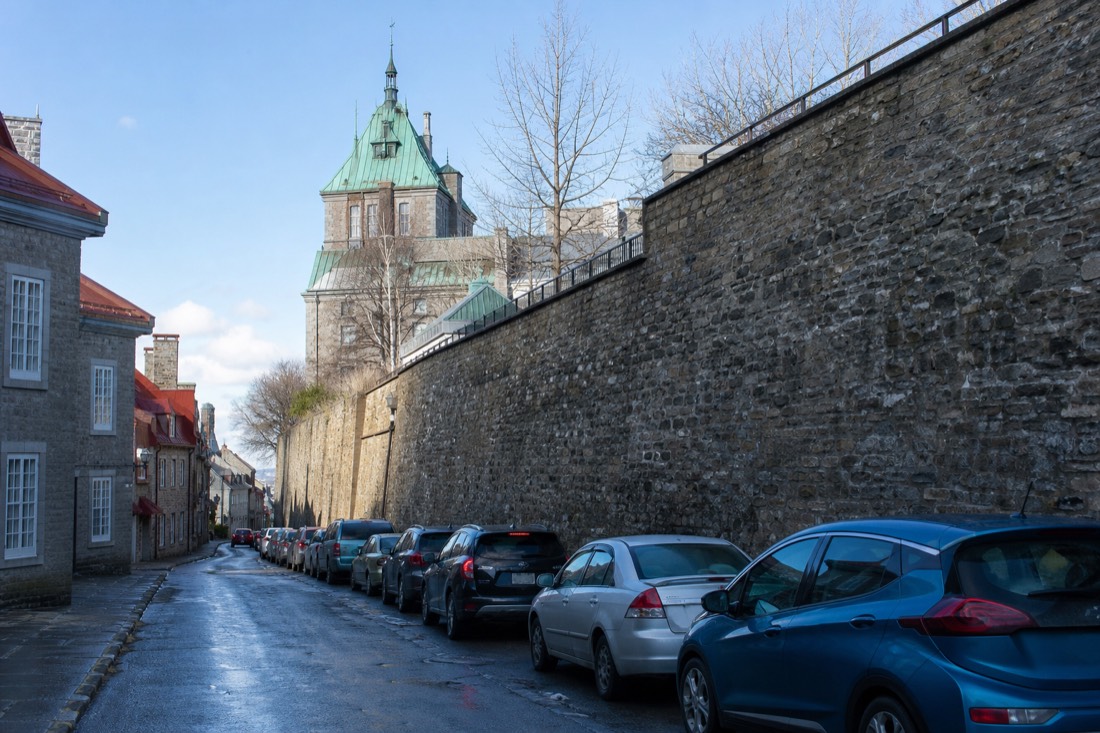
The parking numbers above are the posted 2026-2027 rates at the city hall lot, one of the handful of garages actually inside the old town. That daily cap of $21.50 is three funicular rides with change left over, paid every single day your car sits there doing nothing. I watch visitors burn their first hour circling for a spot that a fifteen-minute walk from a cheaper lot outside the walls would have spared them.
For everything a bus can reach, the RTC network is the budget answer. The current fare schedule took effect on July 1, 2026, and the detail families should know is that children 12 and under ride free with an accompanying adult. Taxis wait at stands near the big hotels and ride-hailing operates in the city, useful at night or when the rain arrives sideways off the river, which it does.
Can You Get Around Quebec City By Bike?
Yes, if the bike has a motor. The grades that make walking here a workout make unassisted cycling a sufferfest, but an e-bike flattens them. A 4-hour electric bike rental runs $44 USD (rated 4.8 by 43 Viator reviewers), enough time to reach the riverside paths and back.
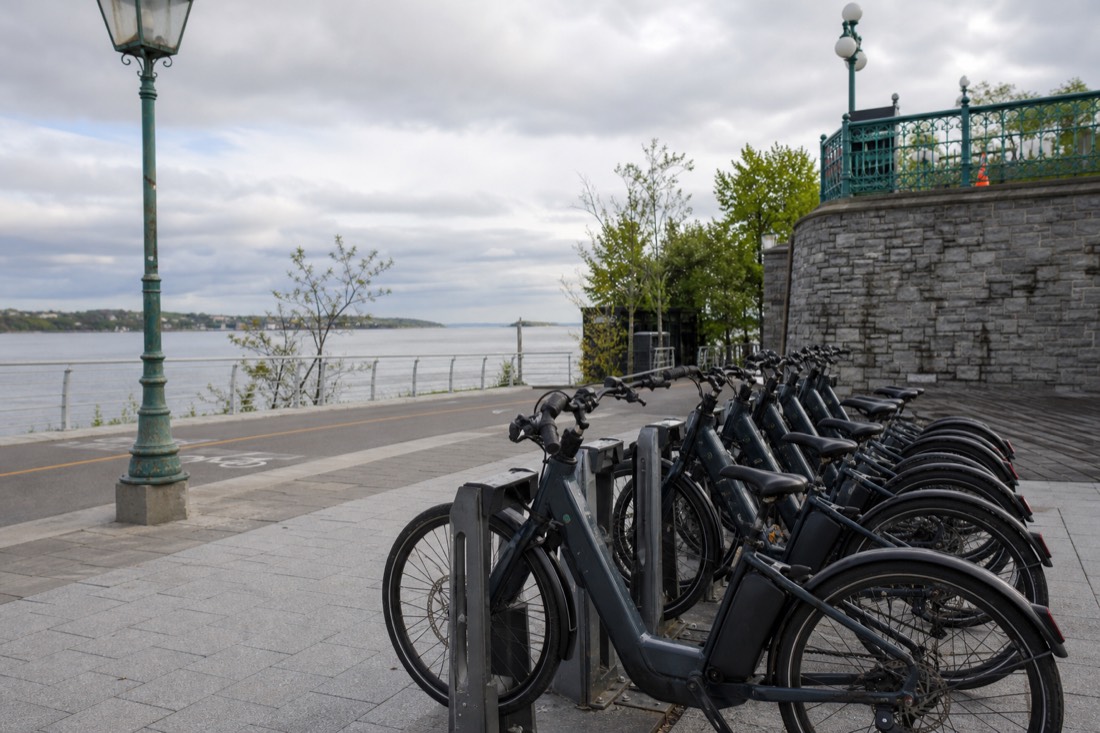
I would not pedal the old town itself; cobbles, crowds and one-way lanes make it slow going, and you will want to be on foot there anyway. Where two wheels earn their keep is the flat riverside routes and the run out toward Montmorency Falls, which guided groups cover as a half-day ride. The rental option suits confident riders who want their own pace; the guided rides suit everyone else. Both live on the bike tours page, with the falls ride as the headline act.
What Does Three Days Of Getting Around Quebec City Cost?
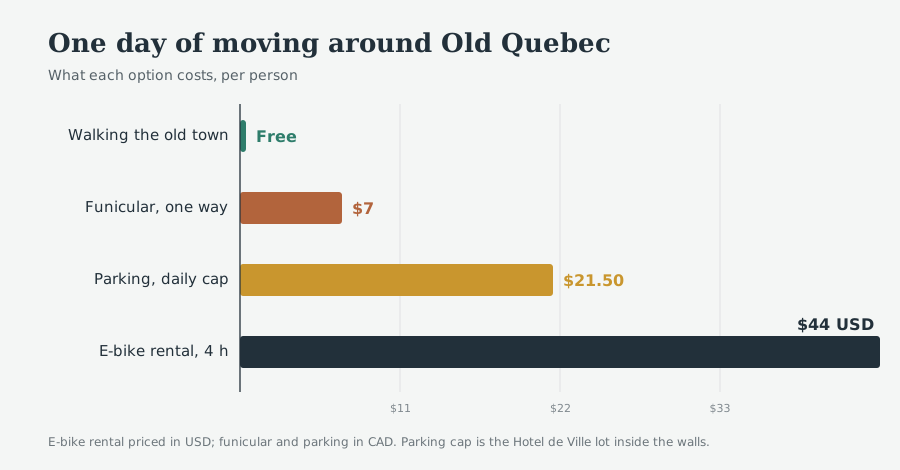
Almost nothing, if you walk. Two funicular rides across three days is $14, and every street inside the walls is free. Park a rental car at the Hôtel de Ville lot instead and the $21.50 daily cap alone reaches $64.50 over the same three days, before you have driven anywhere at all.
Put those two figures side by side and the argument makes itself. The car costs more than four times the funicular over a long weekend, and the funicular is doing something for you, which is more than can be said for a car sitting in a garage inside a walled district it cannot usefully enter.
The table below is a running budget rather than a price list, and the honest gaps are marked. RTC posts a fare schedule that took effect on July 1, 2026, and the detail worth knowing is that children 12 and under travel free with an adult, which quietly makes the bus the cheapest family option in the city. The hop-on-hop-off shows its price at checkout, so I will not guess at it here.
E-bikes are the one line that scales badly with time. Forty-four US dollars buys four hours, not a day, so it is a session rather than a transport plan. Rent one for the riverside run out toward Montmorency and hand it back.
| Three-day plan | What you pay | Running total |
|---|---|---|
| Everything on foot inside the walls | Free | $0 |
| Foot plus two funicular rides | $7 CAD one way, twice | $14 CAD |
| Foot, funicular, one 4-hour e-bike session | Add $44 USD | $14 CAD plus $44 USD |
| RTC buses for the sights beyond the walls | Posted fare; children 12 and under free with an adult | Depends on the ticket type you buy |
| Hop-on-hop-off double-decker | Price shown on the listing | n/a, confirm before you go |
| Rental car parked at the Hôtel de Ville lot | $21.50 a day at the cap | $64.50 in parking alone |
| Rental car for one day trip only | $2 per 20 min while it sits | The version I actually recommend |
When Do Old Quebec'S Streets And Stairs Clog Up?
Between about nine in the morning and mid-afternoon, and the pinch points are predictable: the lanes of Lower Town when ships unload at the foot of the cliff, rue du Petit-Champlain at lunchtime, and Dufferin Terrace wherever the buskers set up. Before nine and after six, the district belongs to residents.
There is one more bottleneck that is purely mechanical, and it catches people out: the funicular does not run before 9:00 or after 21:00. Arrive at the cliff outside those hours and the cliff is yours to solve on foot, which means the Casse-Cou stairs or the long ramp of the Côte de la Montagne.
The rest is crowd flow, and it moves in a fairly reliable direction. Arrivals land at the bottom and work upward, so the counter-move is to do Upper Town first and drop into Petit Champlain in the late afternoon when the flow has reversed. I run my own days that way, and it is the single easiest improvement most visitors can make to a walking itinerary.
The timings below are my read after guiding these streets since 2022, not a traffic study. They shift with the ship schedule and they collapse entirely on a wet Tuesday in October, when the old town is close to empty all day.
| Hour | Where it clogs | Why | My workaround |
|---|---|---|---|
| Before 9:00 | Nowhere, but the funicular is shut | It runs 9:00 to 21:00 | Take the Côte de la Montagne down and the stairs later |
| 9:00 to 11:00 | Lower Town lanes | Ships unload at the foot of the cliff | Do Upper Town first, drop down after lunch |
| 11:00 to 14:00 | Rue du Petit-Champlain | Midday crowds in the narrowest streets in the city | Eat early, or walk the ramparts while everyone eats |
| 14:00 to 17:00 | Dufferin Terrace, mid-boardwalk | The busker circle holds a crowd | Cross at the south end, or give it the 40 minutes |
| After 18:00 | It thins fast | Day visitors and ships gone | The best walking hours of the day |
| After 21:00 | The cliff, again | Funicular closed for the night | Plan the last descent before nine |
What Should Be On Your Feet In Old Quebec?
Grip, in every season. This is a cobbled city on a cliff, and the surface changes underfoot more often than the weather does: rounded stone, wet planking, worn stair treads, packed snow. Smooth soles are the single most common mistake I watch visitors make, and winter punishes them hardest.
I say this to nearly every group, usually while somebody at the back is picking their way down a cobbled slope in something new and flat. The streets are not hostile. They are old, and old surfaces do not forgive footwear chosen for a photograph.
Winter deserves its own paragraph. The Casse-Cou stairs ice over, Dufferin Terrace's planking goes slick under snow, and the cobbles of Petit Champlain freeze into something genuinely treacherous by January. Insulated boots with an aggressive tread handle it. So do slip-on traction cleats, which fold into a coat pocket and cost less than a taxi across town. Locals wear both without embarrassment.
The list below is my own kit judgment, offered as a planning allowance rather than a rule. Nobody has tested these streets in a laboratory. Everyone who guides here has tested them the other way.
| Season | The surface underfoot | What I would wear | What fails |
|---|---|---|---|
| June to August | Dry cobbles, long climbs, warm stone | Broken-in walking shoes with a real sole | New sandals, thin soles, anything with a heel |
| September to October | Wet leaves on cobbles, wind on the cliff edge | Grippy walking shoes plus a windproof layer | Smooth soles, which skate on wet leaves |
| November | First freezes, wet stone, early dark | Waterproof shoes with tread | Canvas anything |
| December to March | Packed snow and ice on stairs, boards and cobbles | Insulated boots with aggressive tread, or slip-on traction | Flat-soled fashion boots, every time |
| April to May | Melt water, road grit, cold benches | Waterproof shoes again | Anything you would mind getting salted |
| Any season, on the stairs | Worn treads, handrails that matter | Whatever you can grip a step in | Loose slip-ons going downhill |
How Hard Is Quebec City If Stairs And Hills Are A Problem?
Honestly: hilly, cobbled, and stair-ridden. This is a 17th-century cliff city and no guide should pretend otherwise. But the funicular removes the biggest climb, Dufferin Terrace is a long level boardwalk, and the bus handles the distances, so a low-stair day is absolutely buildable.
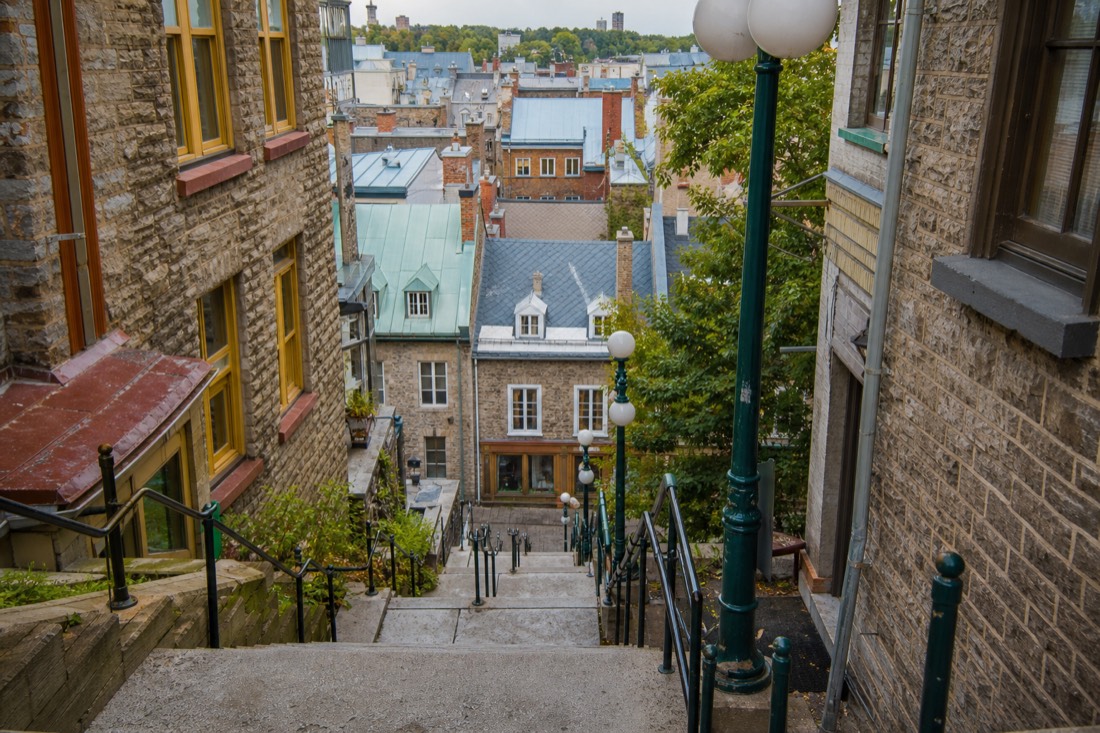
I plan routes for guests with knee trouble every week, so this table is the honest version of what I tell them, spot by spot.
| Spot | Step-free? | What to know |
|---|---|---|
| Dufferin Terrace | Mostly, once you are on it | Long, level boardwalk with the best river views in town |
| Funicular | Yes | The step-light link between the two towns, $7 one way |
| Casse-Cou stairs | No | Steep flights with handrails; icy in winter, skip them then |
| Côte de la Montagne | No steps, steep grade | The road route down; manageable descending, a push going up |
| Rue du Petit-Champlain | Level but cobbled | Rough under wheels and canes; quieter before 10 am |
| Ramparts walk | No | Stairs at the access points and uneven footing throughout |
| Hop-on-hop-off bus | Seated ride | Links the major sights without a single climb |
The pattern of a good low-effort day: bus or taxi to the upper town, the terrace for the views, funicular down, Petit Champlain at a stroll, funicular back up. In January and February add serious traction to every plan; I cover boots, ice and how the city actually feels in the cold months in Quebec City in winter.
The short version of this whole guide fits in a sentence: arrive however you like, then become a pedestrian. The city was built for you.
Your Next Step
Choose Your Quebec Experience
General recommendation, before you add preferences. Confirm dates and participation requirements with the operator.
Have your travel date in mind? Connect Place Royale, Petit Champlain and the upper town with a licensed guide and an included funicular ride. Check the departure before arranging the rest of your day.
2 hours; meet at 112 Rue Saint-Paul and finish near City Hall. Hotel pickup is excluded.
Departure schedule from Viator; final availability and price are confirmed on Viator.
Compare Options And Fit Your Plans
Connect Place Royale, Petit Champlain and the upper town with a licensed guide and an included funicular ride. 2 hours; meet at 112 Rue Saint-Paul and finish near City Hall. Hotel pickup is excluded.
Use the hop-on hop-off route to connect the Citadelle, the Plains and the city neighbourhoods while choosing your stops. Choose a one- or two-day pass. Allow about two hours for the circuit before adding stops; attraction tickets are separate.
Make the journey along the riverside part of your guided visit to Montmorency Falls. Cycling ability and the operator’s age and equipment requirements apply. This is an active outing.
Combine guided Lower Town stories with a round-trip ferry crossing and views from Lévis. 2 hours in English or French; meet at the Wolfe-Montcalm Monument, 7 Rue des Carrières. Ferry fare is included; this is a walking outing with a river crossing.
Affiliate links: we may earn a commission at no extra cost to you.