Free Self-Guided Walking Tour Of Old Quebec: My Exact Route, Stop By Stop
You do not need a ticket to walk Old Quebec well. You need a route that respects the cliff. This is mine, free, in walking order.
 Written with Jean-Pierre Tremblay, Quebec City tour guide & heritage specialist
Quick answer
Yes, you can walk Old Quebec free and self-guided in about three hours: Dufferin Terrace, the Château Frontenac, Place d'Armes, rue du Trésor, then down the 59-step Casse-Cou stairs or the funicular to Petit Champlain, Place Royale and the Old Port, finishing along the 4.6 km of walls and gates.
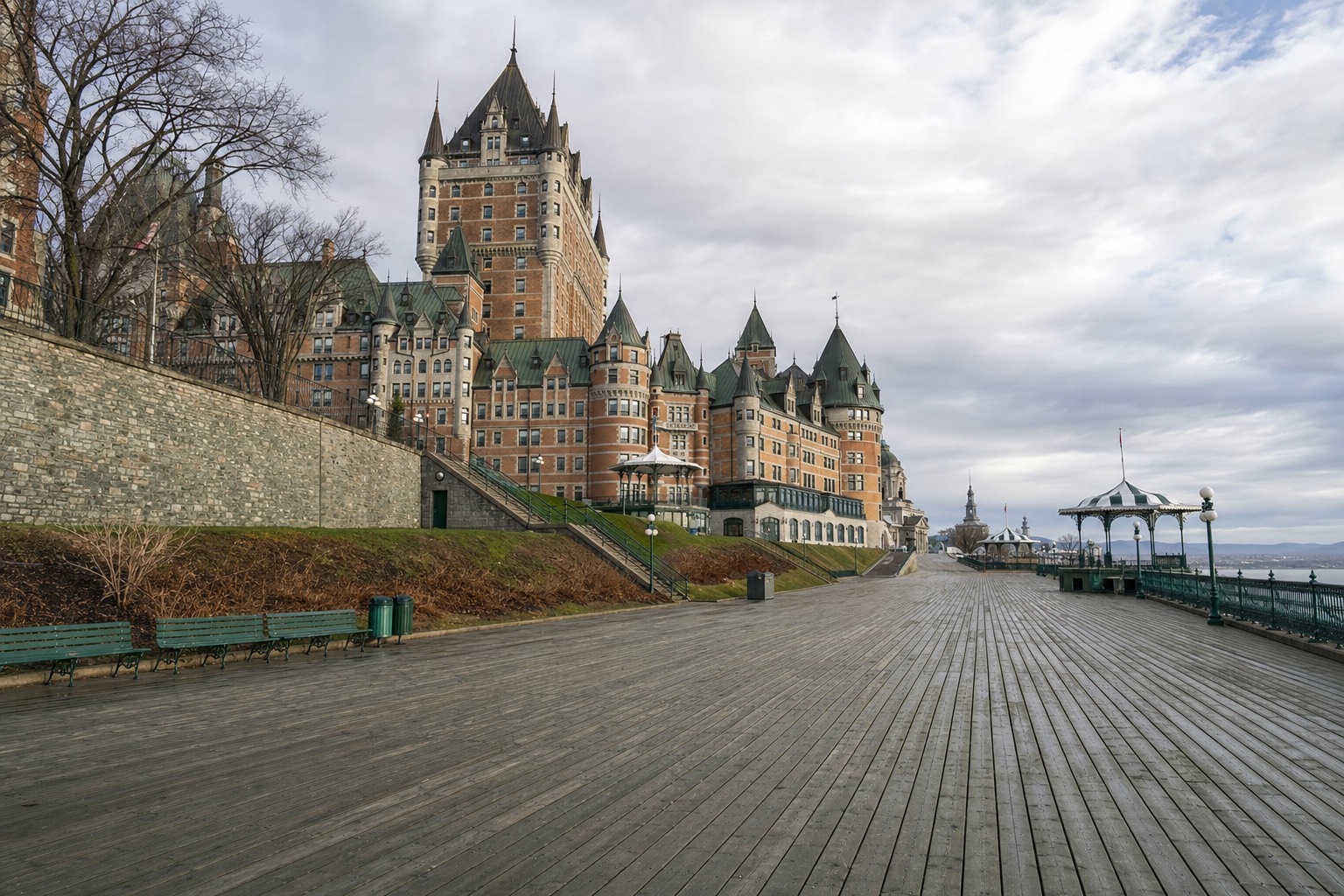
Eight in the morning on Dufferin Terrace, and the boardwalk belongs to the gulls, two joggers, and me. This is where I start the tours I lead for a living, and it is where your free one starts too. I have walked more than a thousand visitors around the loop below, by my own count, since 2022, and the route itself has never cost anyone a cent. It asks only for shoes with grip and about three hours of your morning.
TL;DR: Old Quebec walks itself if you follow the geography: start high on Dufferin Terrace, circle the Frontenac, Place d'Armes and rue du Trésor, drop the cliff by the 59-step Casse-Cou stairs or the funicular, take Petit Champlain and Place Royale slowly, breathe at the Old Port, then finish on the walls. Free, about three hours. A $6 audio version and a $41 guided version cover the same stones if you want narration.
Is There A Free Walking Tour Of Quebec City?
Yes, two kinds. Pay-what-you-wish walking tours operate in Old Quebec, free to join with guides who work for tips, and the fully self-guided route in this guide costs nothing at all. Paid small-group walking tours start around $23 USD for two hours on Viator, and I compare every option honestly further down.
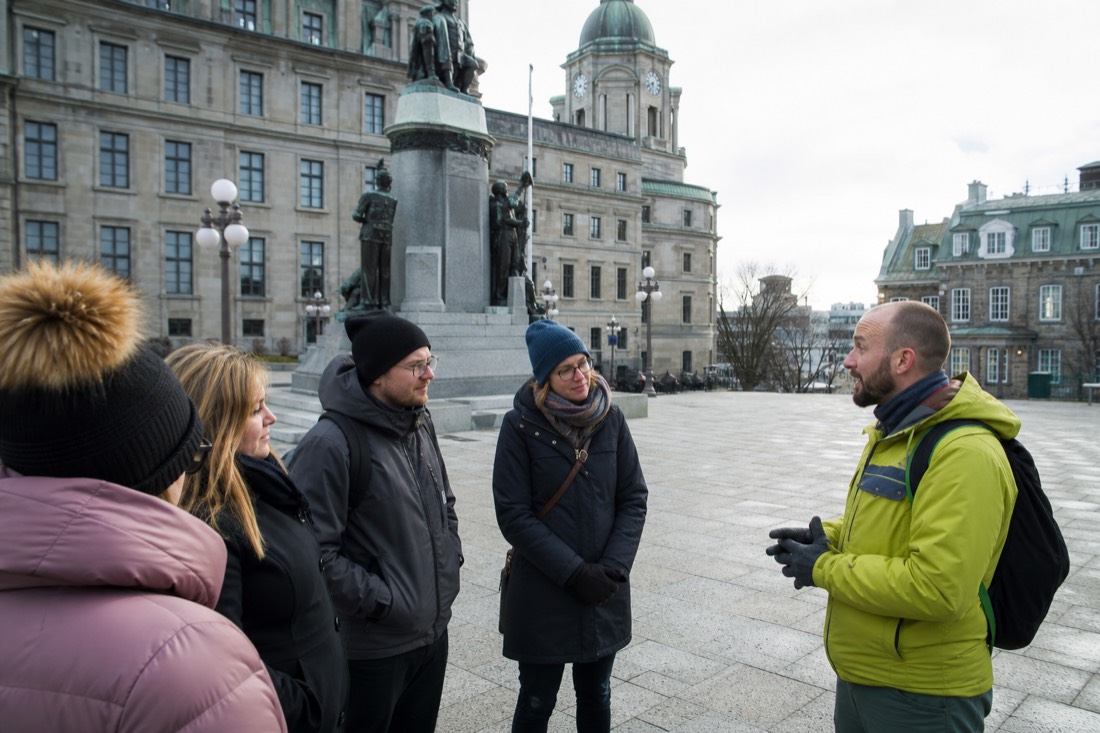
A word from inside the trade about the tip-based tours: "free" means no ticket, not no cost. The guide is working, the hat comes around at the end, and the fair tip lands near what a budget paid tour charges anyway. Nothing wrong with that model, but it still binds you to a departure time and a group's pace.
The self-guided route escapes both. Old Quebec is compact, the streets announce themselves on stone plaques, and the district is walled, so you cannot drift far wrong. You give up narration and the chance to ask questions. You gain the freedom to spend forty minutes in a lane the tours give four. This guide hands you the structure a guide provides, the order of stops and the time budget, and lets the city do the talking.
What Is The Route, And Where Is The Walking Tour Map?
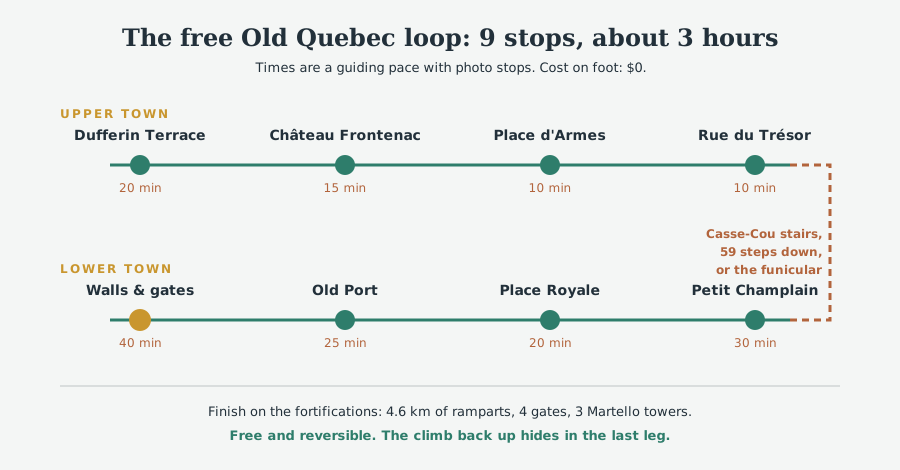
A loop: Dufferin Terrace, the Château Frontenac, Place d'Armes, rue du Trésor, then down the Casse-Cou stairs or the funicular to Petit Champlain, Place Royale and the Old Port, and back up to finish along the walls and gates. Three hours at a photo pace. The table and diagram below are the only walking tour map you need.
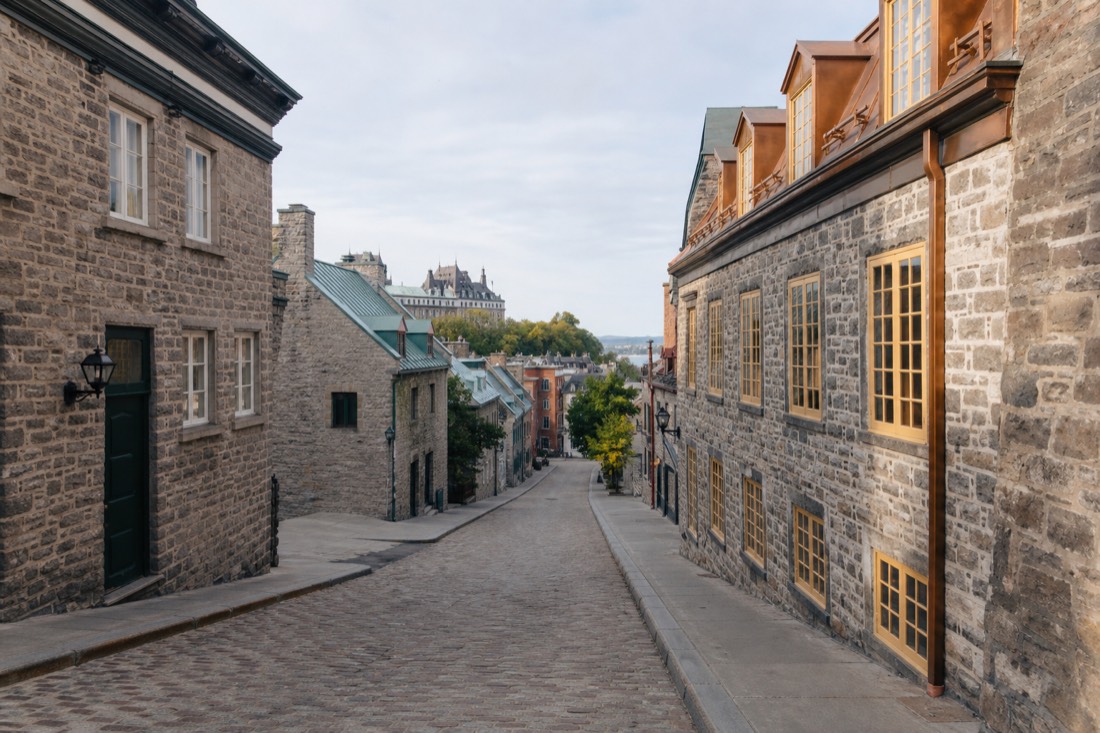
Guests ask me for a printed walking tour map more than anything else, and my answer never changes: the old town is small enough to carry in your head. Learn the loop as a shape, high town first, low town second, walls last, and every wrong turn self-corrects within a block. The minutes below are a guide's stopwatch, not a survey, so stretch them wherever the city catches you.
| # | Stop | My time budget | Why stop |
|---|---|---|---|
| 1 | Dufferin Terrace | 20 min | The river and the best free view of the Frontenac |
| 2 | Château Frontenac, up close | 15 min | Courtyard angles, copper roofline |
| 3 | Place d'Armes | 10 min | Where every tour in town converges |
| 4 | Rue du Trésor | 10 min | One block of hung prints |
| 5 | Casse-Cou stairs or funicular | 5 to 10 min | The descent is a viewpoint |
| 6 | Rue du Petit-Champlain | 30 min | Slower than it looks, happily |
| 7 | Place Royale | 20 min | The old square and its stone church |
| 8 | Old Port | 25 min | Flat breather before the climb |
| 9 | Walls and gates | 40 min | The finale on the ramparts |
Call it three hours with stops, closer to two if you march. The loop slots neatly into the first morning of a longer Quebec City itinerary, leaving the afternoon for whatever pulled at you on the way around.
What Do You See In The Upper Town Half?
Four stops before the descent: Dufferin Terrace for the St. Lawrence and the postcard angle on the Château Frontenac, the hotel itself at courtyard range, Place d'Armes where the guided groups gather, and rue du Trésor, the narrow alley where artists hang their prints between stone walls.
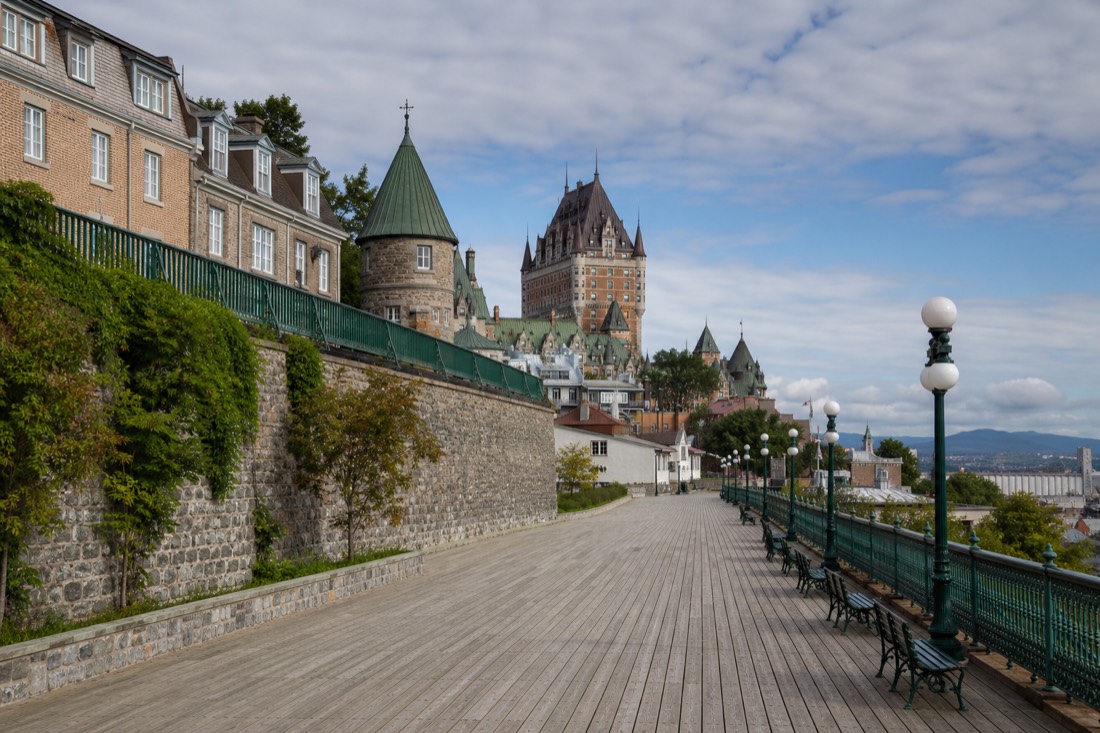
Take the terrace slowly. It is a long, level boardwalk hung off the cliff edge, and the view swings from the river traffic below to the Frontenac's turrets above: the city introduces both of its levels at once, which is why I start every walk here. Street performers claim the widest stretch by mid-morning in summer, one more argument for coming early.
The Frontenac deserves a circle of its own; you do not need a room key to walk its exterior, and I cover what you can and cannot see inside in visiting the Château Frontenac. From there Place d'Armes is a minute away. Pause to watch the tour groups form, then slip into rue du Trésor, a single block of open-air art most groups walk straight past. At the bottom of it you turn toward the cliff, and the walk changes gear.
How Do You Get Down To Petit Champlain And Place Royale?
Two honest options off the cliff: the Escalier Casse-Cou, 59 steps and the oldest staircase in the city, with stairs on this spot since around 1680, or the funicular beside it. Both land you at the head of rue du Petit-Champlain, with Place Royale two minutes on.
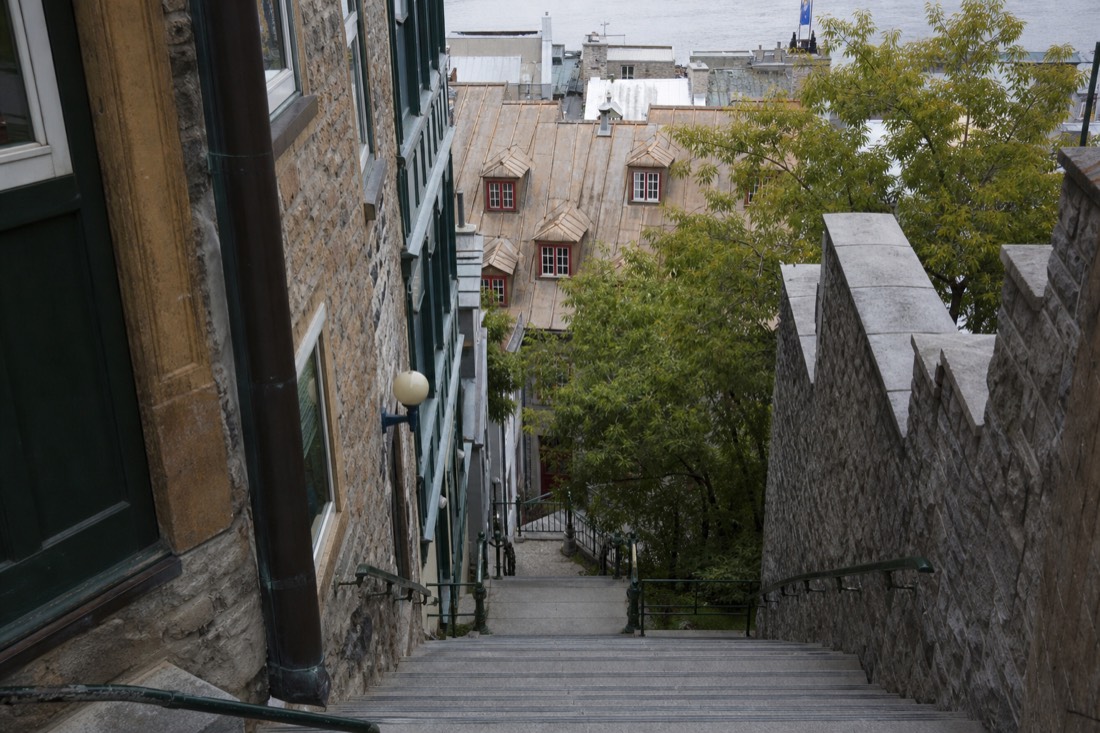
The stairs are free and going down they are easy; the "breakneck" name earns itself on the way back up, and in winter on the ice. The funicular is my pick for tired knees, its glass car turning the drop into a view. Current fare and hours sit in my getting around Quebec City guide.
However you descend, rue du Petit-Champlain rewards the slowest walking of the day. The street runs only about 0.26 km, yet it holds rank as one of the oldest commercial streets in North America, boutiques and restaurants stacked into stone houses under the cliff face. Thirty minutes vanishes here without effort. Follow the lane around to Place Royale, where the square tightens around its old stone church, then let the streets widen toward the Old Port. The quays are flat and the river boats tie up along this stretch; if the water tempts you for another day, the cruises page covers what sails from here and what it costs.
Why Finish The Walk On The Walls?
Because the walls are the point of the city. Old Quebec keeps 4.6 km of ramparts, four gates, three Martello towers and the Citadelle, and climbing back from the Old Port to finish on top of the fortifications lets you look down over every street you just walked.
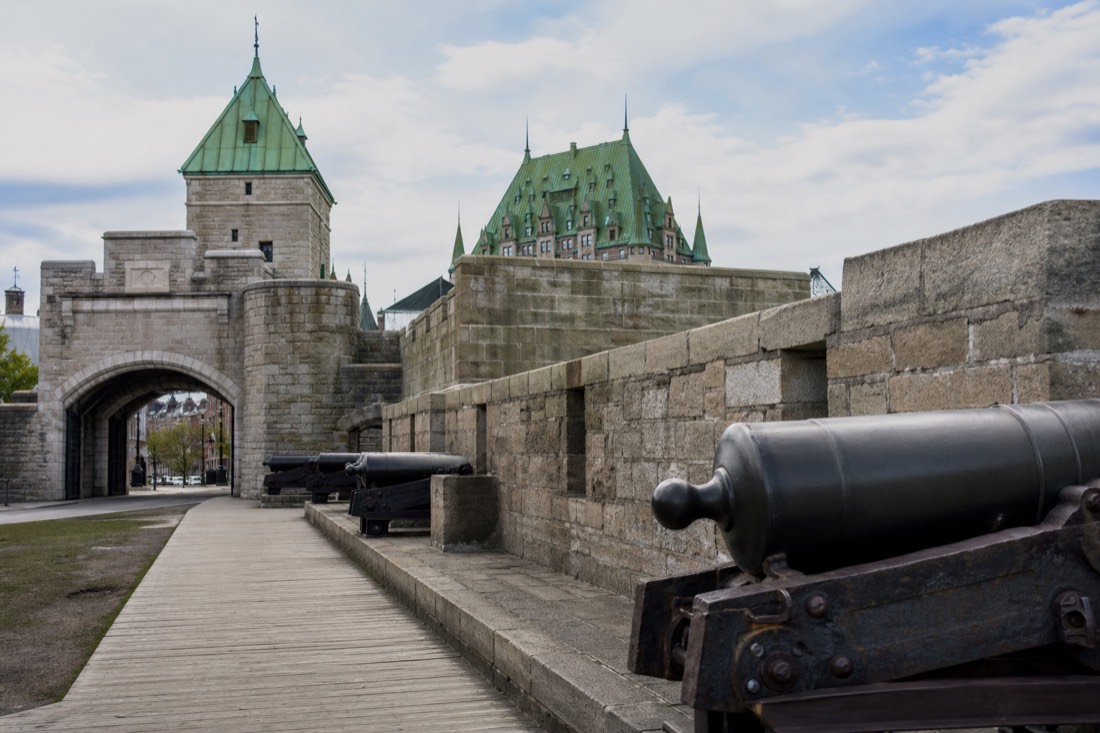
Those figures are the city's own count, laid out on the tourism office's page about life inside the walls. Walking a stretch of the ramparts turns the whole morning into a single view: the roofs of the low town you climbed out of, the river beyond, the gates punched through the stone. Budget the full forty minutes and spend part of it doing nothing but leaning on the wall.
This stop is where the walk earns its bragging rights, because these fortifications are why the old town stands apart from every other city on the continent. I tell that fuller story in the only walled city north of Mexico. Read it before you go and the ramparts stop being scenery.
Free, $6 Audio, Or A Live Guide: Which Walking Tour Should You Choose?
Walk free if you like setting your own pace and reading the city off its plaques. Pay $6 USD for the Viator self-guided audio tour when you want stories in your ear without a group or a schedule. Pay $41 USD for the Old Quebec Classique guided walk, rated 4.9 across 1,538 reviews, when you want a human who answers back.
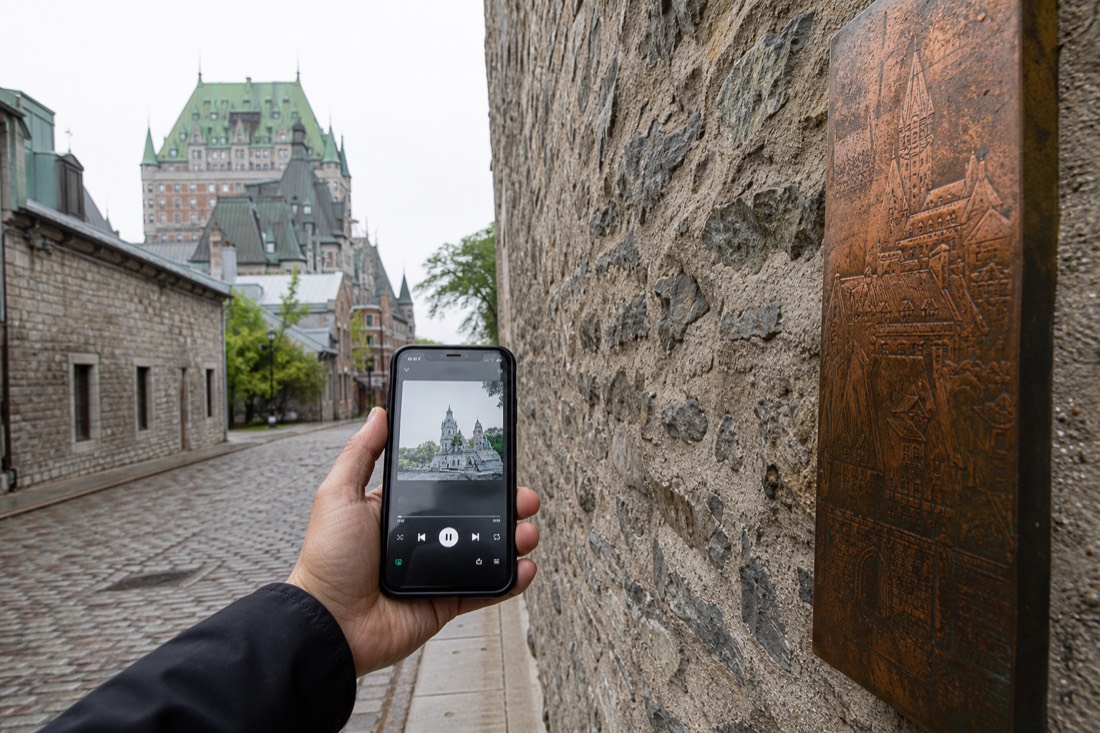
I lead tours, so believe me when I say the free route above is genuinely enough for an independent traveller. The honest question is what each paid step up buys you.
| Option | Price | Narration | Schedule | Best for |
|---|---|---|---|---|
| This free route | $0 | Plaques and this guide | None, walk any time | Independent walkers, tight budgets, odd hours |
| Pay-what-you-wish tour | Tip-based | Live guide | Fixed departures | A human guide at a price you set |
| Self-guided audio tour | $6 USD | Recorded narration | None, your own pace | Stories without a group or a clock |
| Classique guided walk | $41 USD | Live guide, 4.9 across 1,538 reviews | Scheduled, 2 hours | First visits, questions, full context |
The $6 audio option is the natural upgrade to this exact route: same stones, same descent, with a narrator carrying the history so your eyes stay up instead of on a screen. The whole paid field lives on the walking tours page, and for the audio version, check live availability & prices on Viator before you build your morning around it.
And what does a live guide add that neither free nor audio can? Answers, mostly. A recording cannot field your question about the carving over a doorway, reroute around a blocked street, or read that your kids need the short version. The Classique walk folds the funicular ride into its ticket, runs a tight two hours, and holds 4.9 across 1,538 Viator reviews; the busiest walking tour in town, from Tours Voir Québec, carries 4.8 across 4,995. Guided walking here is a strong product, which is exactly why the free version deserves to exist honestly beside it instead of pretending to be it.
When Is Old Quebec Quietest For A Self-Guided Walk?
Before 9 a.m., any day, any season. The cruise season runs May to October and one recent season logged 156 calls, with ships berthing at Wharfs 21 and 22 a short walk from Petit Champlain. That crowd lands in Lower Town late morning and thins again by mid-afternoon.
The advantage of walking without a guide is that you can move against the traffic, and the traffic in this town is predictable. Guided groups form at Place d'Armes through the middle of the morning, then work down the cliff, which means Petit Champlain and Place Royale carry the day's densest foot traffic from roughly ten to one. Ship passengers arrive into the same window. If you start on Dufferin Terrace at eight and take the descent before the groups do, you are permanently one step ahead of them.
Evenings work too, in a different way. The lanes below the cliff empty out beautifully once the day visitors leave, and the shops closing takes nothing away from the stonework. Winter weekdays are the emptiest the old town ever gets, with one exception in the calendar: Carnival week, February 5 to 14 in 2027, when the crowd comes back in coats.
| Hour | Where the crowd is | Where you should be |
|---|---|---|
| Before 9 a.m. | Nowhere. Gulls, joggers, delivery vans | Dufferin Terrace, then the Frontenac exterior |
| 9 to 10 a.m. | Groups forming at Place d'Armes | Rue du Trésor, then the descent |
| 10 a.m. to 1 p.m. | Petit Champlain and Place Royale, ship passengers included | Up on the walls, or flat along the Old Port quays |
| 1 to 4 p.m. | Old Port, shops, street performers on the Terrace | Back into the Lower Town lanes as the ships call people home |
| After 5 p.m. | Restaurant terraces | Rue du Petit-Champlain, at its best nearly empty |
| Winter weekdays | Thin everywhere | Anywhere at all, with traction on your boots |
What Does This Free Walk Cost Once You Add The Extras?
Nothing, until you decide otherwise. The route above is free from end to end. The optional add-ons sitting directly on it are small: a funicular ride at $6 to $7 cash, a $5 toboggan run on the Terrace in winter, $22 for the Citadelle, and $6 USD for recorded narration in your ear.
This is the part of the guide I most want people to read before they book anything. The expensive-looking sights on this route are not the ones that make it good. Nobody remembers the ticket; they remember the moment on the ramparts when the whole low town lays itself out below. That view has never cost anything and never will.
Where a few dollars genuinely change the walk: the funicular, if knees or ice make 59 steps a bad idea, and the crypt under Dufferin Terrace, which is free and which most people walk straight over without knowing it is there.
| Add-on, all on this route | Price | Worth it when |
|---|---|---|
| The nine-stop loop itself | $0 | Always. This is the guide |
| Funicular instead of the Casse-Cou | $6 to $7 one way, cash | Tired knees, ice underfoot, or you want the glass car view |
| Saint-Louis Forts and Châteaux crypt | Free | Under the Terrace, and free again through the Canada Strong Pass window, 19 June to 7 September 2026 |
| Dufferin Terrace toboggan run | $5 CAD, paid on site | Winter, and you have twenty minutes to spare |
| Citadelle admission, adult 2026 | $22 CAD | You want inside the star fort; the price carries a 60-minute guided tour |
| Self-guided audio version | $6 USD | You want stories without a group or a departure time |
| Classique guided walk | $41 USD | 4.9 across 1,538 reviews, funicular ride included |
| Parking, if you drive into the old town | $2 per 20 min, $21.50 daily cap | Rarely. Leave the car where you sleep |
What Should You Wear And Carry For This Walk?
Grip first, everything else second. The cobbles roll underfoot even on level stretches, and the Casse-Cou ices over from December to March. January averages a high of -8 °C and a low of -18 °C. July brings 25 °C days and about 128 mm of rain across the month. Dress for the surface, then the sky.
I lose more guests to footwear than to weather. Fashion sneakers with a flat sole are fine on a pavement and treacherous on wet cobblestone, and the Casse-Cou punishes them on the way down. Whatever season you come in, the shoes are the equipment decision that matters.
After that it is layers and small practicalities. The funicular takes cash, which surprises people at the top of the cliff with a card in their hand. Water matters more than visitors expect on a summer loop that logs 8,000 to 12,000 steps. And in deep winter, traction devices that slip over a boot sole cost very little and turn the whole upper town from a hazard back into a walk.
| Season | On your feet | In the bag | The specific reason |
|---|---|---|---|
| December to March | Winter boots plus slip-on traction cleats | Hat, gloves, hand warmers, cash | 73 cm of snow in January, 63 cm in February, and ice on every descent |
| April and May | Waterproof shoes with real tread | Layers you can shed, small umbrella | Melt, grit and wet cobbles at their worst |
| June to August | Broken-in walking shoes, not new ones | Water, sun cover, a light rain shell | 128 mm of rain across July, and 8,000 to 12,000 steps a day |
| September and October | Grippy shoes, one warm layer | Wind layer for the ramparts | September runs 18 °C by day and 8 °C at night, October 11 °C and 2 °C |
| Any month | Whatever has the best sole | Cash for the funicular, and this stop table | Card is not accepted at the funicular window |
Can You Do This Walk Without The Stairs?
Yes. Ride the funicular or take the road grade of Côte de la Montagne instead of the 59-step Casse-Cou, and trace the wall line at street level through the gates instead of climbing onto the ramparts. The loop becomes stair-free. The cobbles stay, so wheels and canes still want patience.
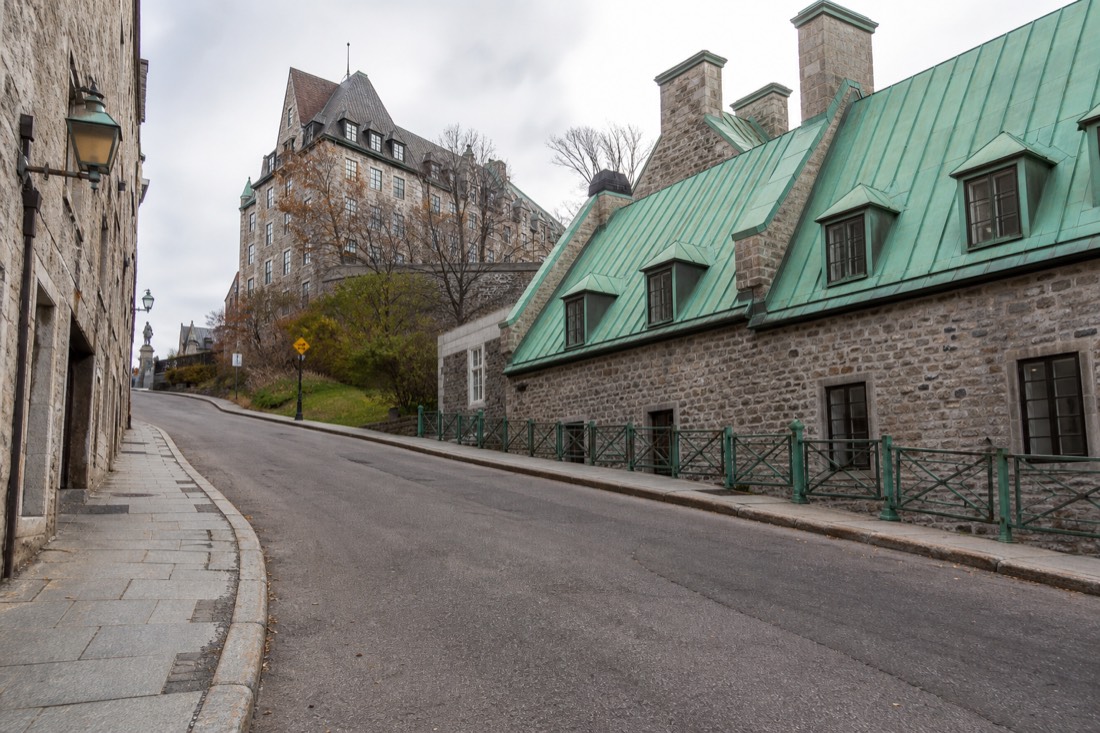
I rebuild this route for guests with knee trouble most weeks, so here is the honest section-by-section version.
| Route section | The stair version | Step-free alternative |
|---|---|---|
| Upper Town to Lower Town | Casse-Cou, 59 steps | Funicular, or Côte de la Montagne's steady road grade |
| Rue du Petit-Champlain | Level but cobbled | Same street; quieter footing before 10 am |
| Place Royale to Old Port | Level, uneven cobbles | Same route, taken slow |
| Old Port back up | Stair shortcuts | Côte de la Montagne on foot, or funicular back up |
| Walls finale | Stairs at ramparts access points | Street-level walk beside the walls, passing through the gates |
Two cautions from experience. Cobblestones are their own terrain: even the level stretches roll underfoot, so wear the sturdiest shoes you own. And season changes everything. From roughly December to March the stairs ice over and I move every descent to the funicular; the full cold-weather picture, boots and traction included, lives in Quebec City in winter.
The whole guide compresses to one sentence: the best tour of Old Quebec starts free, on the boardwalk, at the hour when the gulls still outnumber the people. Walk it, and decide at the end whether the city needs narrating at all.
Your Next Step
Choose Your Quebec Experience
General recommendation, before you add preferences. Confirm dates and participation requirements with the operator.
Have your travel date in mind? Keep control of your pace with a self-guided walking route through historic Quebec City. Check the departure before arranging the rest of your day.
Read the listing’s phone and route instructions before setting off. This is not a live guide.
Departure schedule from Viator; final availability and price are confirmed on Viator.
Compare Options And Fit Your Plans
Keep control of your pace with a self-guided walking route through historic Quebec City. Read the listing’s phone and route instructions before setting off. This is not a live guide.
Connect Place Royale, Petit Champlain and the upper town with a licensed guide and an included funicular ride. 2 hours; meet at 112 Rue Saint-Paul and finish near City Hall. Hotel pickup is excluded.
Explore the fortifications and historic gates with a licensed guide in period military costume. 2 hours in English or French; meet at the Wolfe-Montcalm Monument, 7 Rue des Carrières. An outdoor heritage circuit; Citadelle and battlefield museum entry are not included.
Combine guided Lower Town stories with a round-trip ferry crossing and views from Lévis. 2 hours in English or French; meet at the Wolfe-Montcalm Monument, 7 Rue des Carrières. Ferry fare is included; this is a walking outing with a river crossing.
Affiliate links: we may earn a commission at no extra cost to you.